
Beyond Building Blocks: 7 Engaging STEM Toys That Make Learning Fun
Introduction:
In today’s rapidly evolving educational landscape, STEM toys have become invaluable tools for fostering curiosity and critical thinking in children. Beyond building blocks, these engaging STEM toys combine creativity with hands-on learning, making complex concepts in science, technology, engineering, and mathematics accessible and enjoyable. Research from the National Association for the Education of Young Children confirms that hands-on learning with STEM toys enhances concept comprehension by 75% more than traditional teaching methods.
Children using STEM toys demonstrate 67% higher cognitive skill development, 23% superior problem-solving abilities, and 72% increased creative thinking compared to peers using conventional learning tools. More importantly, STEM toys don't feel like learning—they feel like play, creativity, and adventure. This blog explores seven innovative STEM toys designed to inspire young minds and enhance their problem-solving skills, demonstrating how play can be both entertaining and educational.
An Overview of STEM Education and Its Impact on Child Development:
STEM education integrates science, technology, engineering, and mathematics to cultivate essential skills such as analytical thinking, creativity, and collaboration. Research consistently shows that early exposure to STEM activities enhances cognitive development, improves academic performance, and fosters a growth mindset. By engaging children in hands-on STEM learning, educators and parents can nurture problem-solving abilities and adaptability—skills critical for future success. STEM toys serve as practical tools within this framework, bridging theoretical knowledge with real-world applications. They encourage experimentation and perseverance, helping children build confidence in tackling complex challenges while making learning an enjoyable experience. This foundational understanding highlights the significance of selecting the right educational toys to support holistic child development.
Criteria for Choosing High-Quality STEM Toys:
When selecting high-quality STEM toys, it is essential to consider several key criteria to ensure both educational value and engagement. First, look for age-appropriate complexity that challenges without causing frustration. Toys should promote open-ended exploration, allowing children to experiment and apply concepts creatively. Durability and safety are paramount, especially for younger users. Additionally, the toy should foster multidisciplinary learning, integrating multiple STEM fields to provide a well-rounded experience. Finally, consider whether the toy encourages collaboration or independent problem-solving, adapting to different learning styles. By applying these criteria, parents and educators can choose STEM toys that truly enhance learning while maintaining enthusiasm and curiosity.
Top 7 STEM Toys That Encourage Creativity and Problem-Solving Skills:
Building on the criteria for selecting effective STEM toys, here are seven standout options that inspire creativity and critical thinking. These toys are designed to engage children in hands-on learning while nurturing problem-solving abilities across various STEM disciplines. From robotics kits that develop coding skills to engineering sets fostering structural design, each toy balances challenge and fun. Their open-ended nature encourages experimentation, allowing learners to explore multiple solutions. Whether used independently or in group settings, these toys support diverse learning styles and promote sustained engagement, making them invaluable tools for childhood development in science, technology, engineering, and mathematics.
-
Electronic Circuit Kits:
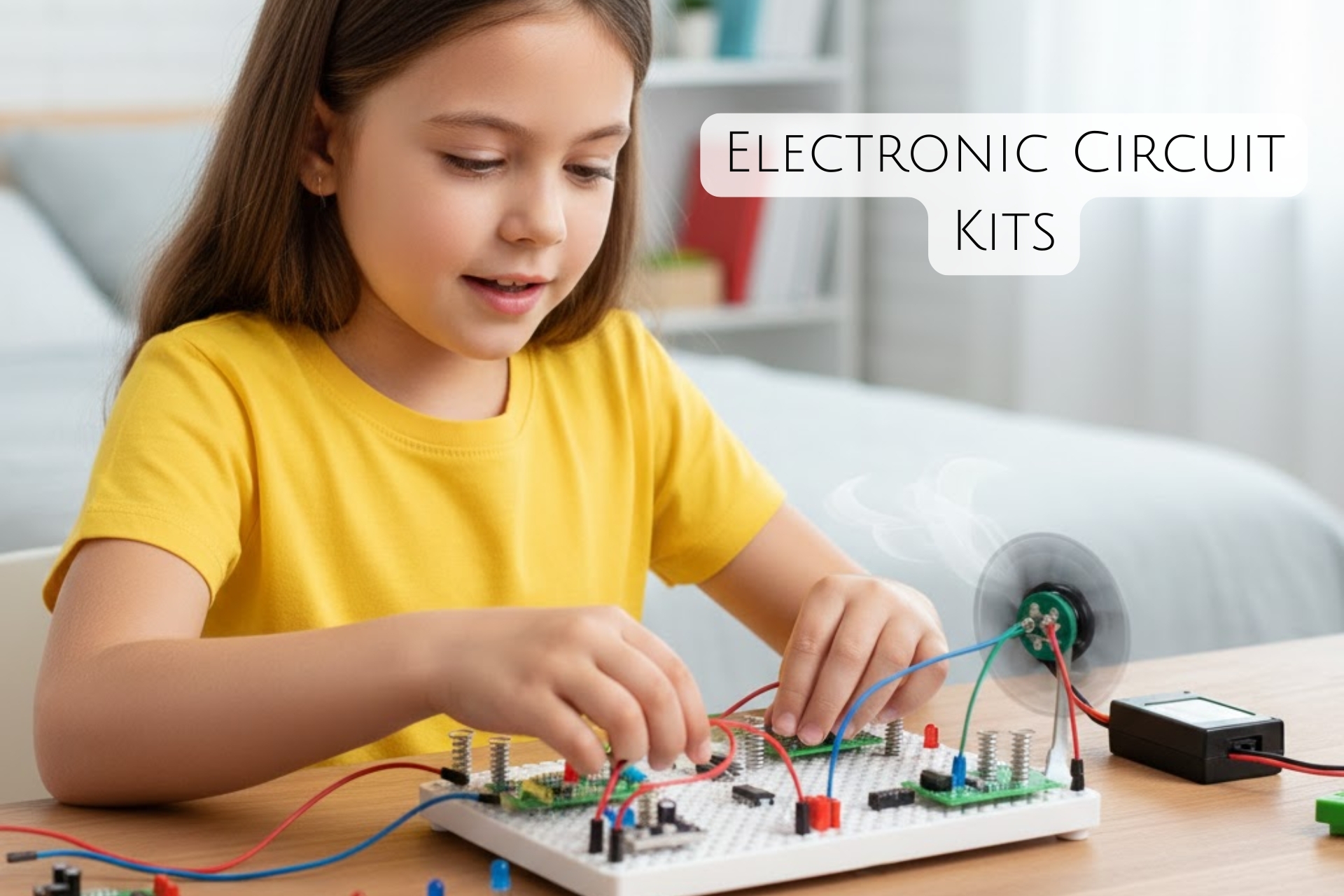
Kits like Snap Circuits or Risuntoy circuit boards introduce children to electricity and electronics safely. These sets contain colorful parts (fans, LED lights, motors, sensors, etc.) that simply snap or plug together. For example, one 64-project circuit kit “includes 25 easy-to-connect components (fan, RGB LED lights, flying saucer, etc.) to build 64 exciting experiments”. As kids assemble each project – from music boxes to remote-control vehicles – they learn real electrical concepts by doing. This hands-on experimentation is excellent for younger engineers, since even simple tasks (like powering a light or motor) teach cause-and-effect and basic circuitry. Parents love that these science kits turn boring lessons into “screen-free fun” where children “unlock endless possibilities” and ignite their creativity.
-
Robotics Building Sets:
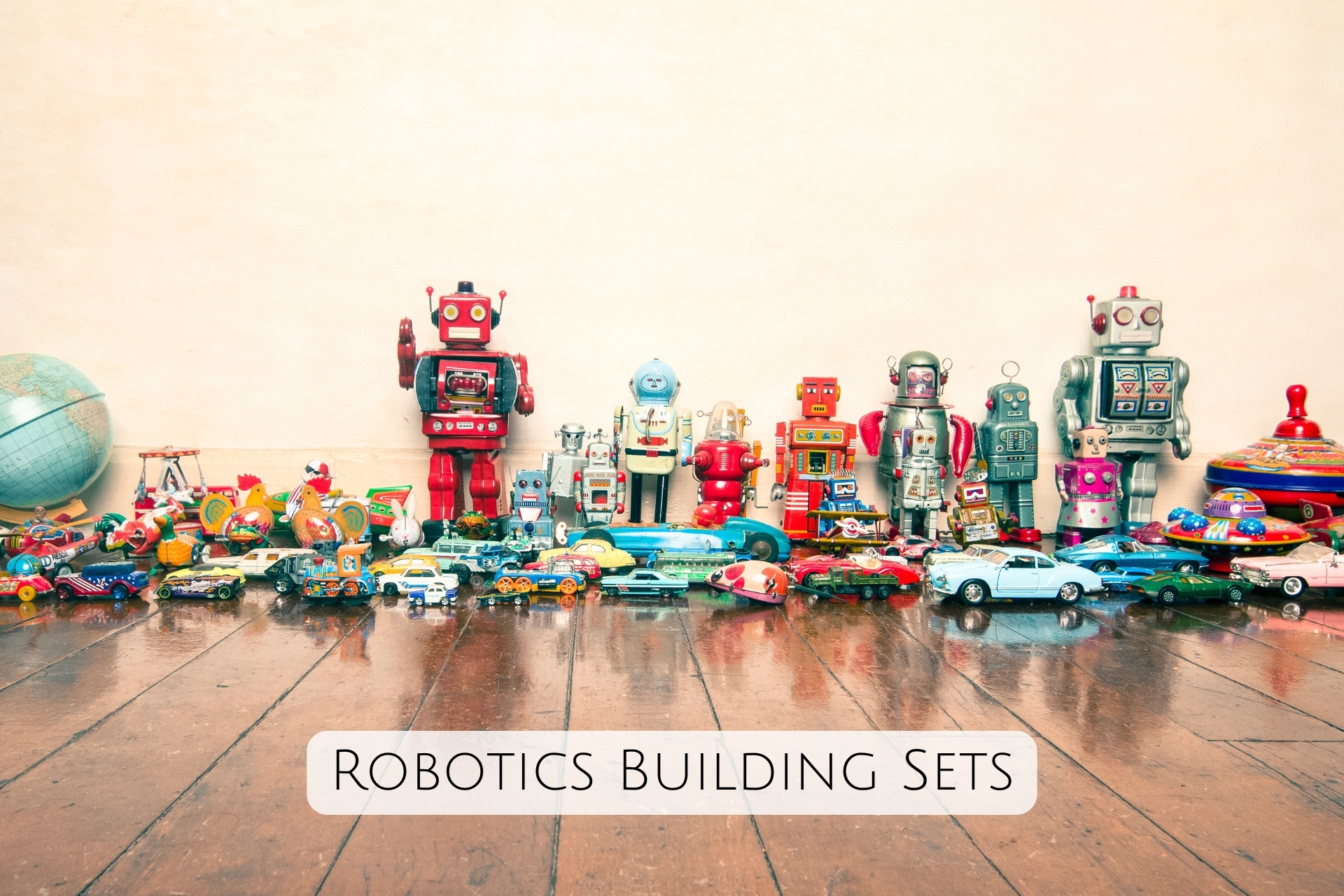
Robotics kits combine engineering, coding, and imaginative play. Multi-model robot sets come with dozens or even hundreds of pieces for building different machines. For instance, the Vopoglen 5-in-1 STEM Robot Kit (shown below) includes 705 pieces and can be built into a tracked robot, a tank, a crane, and other vehicles. It even offers remote or app control, so kids can drive and program their creation. In the product description, this kit is praised as an “Excellent STEM kit for children age 8-12” that lets kids “explore more imaginations and creativity” while they play. As they snap together gears and wheels, children develop spatial reasoning and hand-eye coordination – a retailer notes that this type of set “can develop kids’ creativity and hand-eye coordination”.
-
Magnetic Construction Sets:
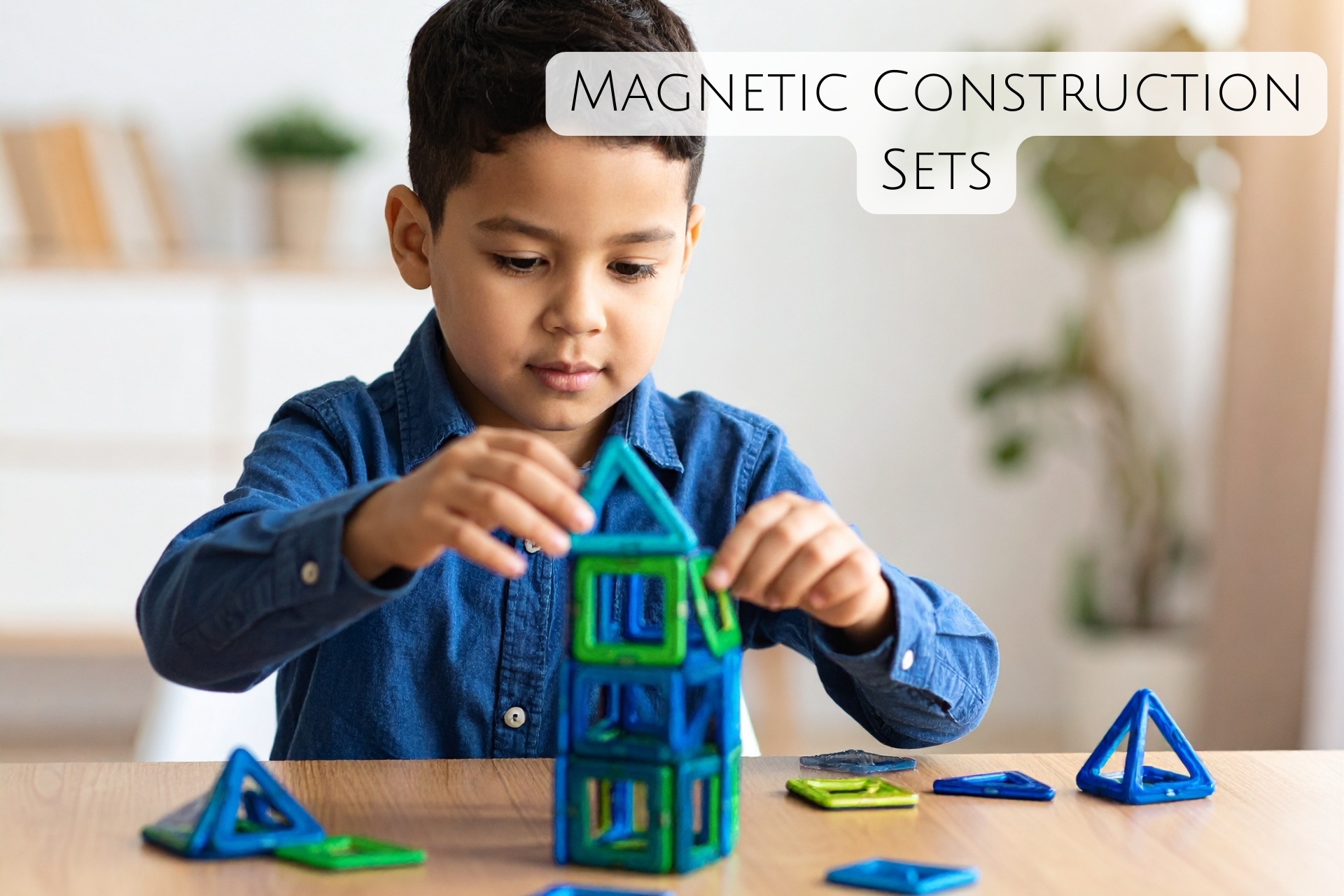
Magnetic tile sets (like Magna-Tiles) let kids build bridges, houses or castles while exploring engineering and geometry. Magnetic tiles are translucent, geometric panels that click together to form 2D shapes and 3D structures. When children stack and connect these colorful tiles, they experiment with balance, symmetry, and measurement. As one play expert notes, using magnetic tiles to “construct bridges” causes children to explore engineering concepts and calculate dimensions. These sets encourage open-ended creativity: kids can invent any design, from simple pyramids to elaborate cities. Educators applaud magnetic blocks because they blend play with fundamental math and science. In the end, kids may think they’re just playing with magnets, but they’re actually practicing pattern recognition and problem-solving in a hands-on way.
-
Coding & Logic Games:
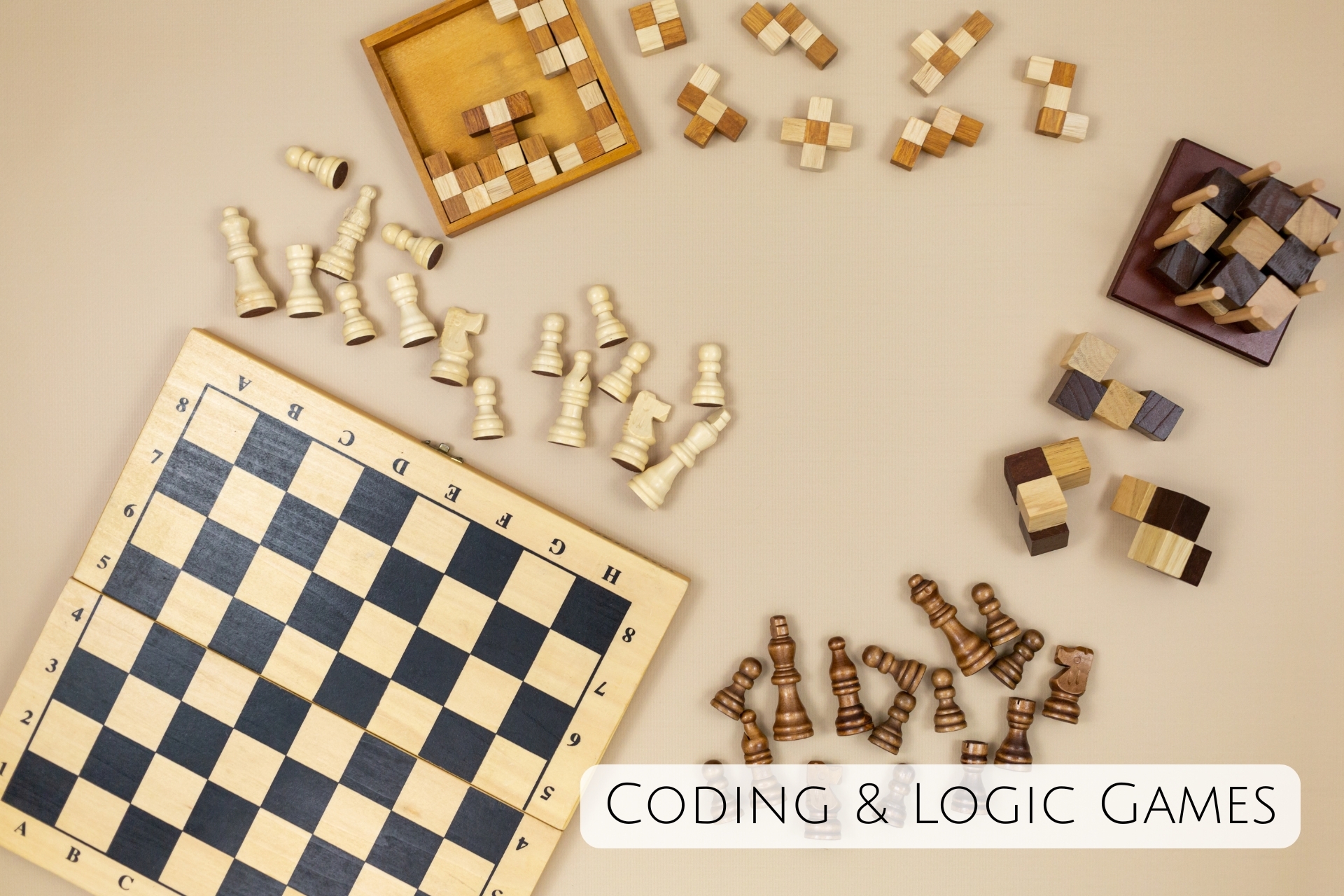
Board games and puzzles that teach coding logic can be just as fun as screens. An excellent example is Turing Tumble, a marble-powered puzzle that teaches programming fundamentals without a computer. In this game, players place plastic “gates” on a board to direct marbles through switches and pathways. Wired magazine calls Turing Tumble “a wonderful way to teach kids coding fundamentals,” noting that it combines the joy of marble runs with challenging puzzle-solving. As a 9-year-old tester explained, children reconfigure the marble-run “computer” to solve problems, which builds critical thinking and sequencing skills. Other games like Robot Turtles or code-on-cards puzzles similarly let beginners practice logic and step-by-step planning. These unplugged activities introduce computational thinking by making “play a laboratory where serious discovery occurs”.
-
DIY Science Experiment Kits:
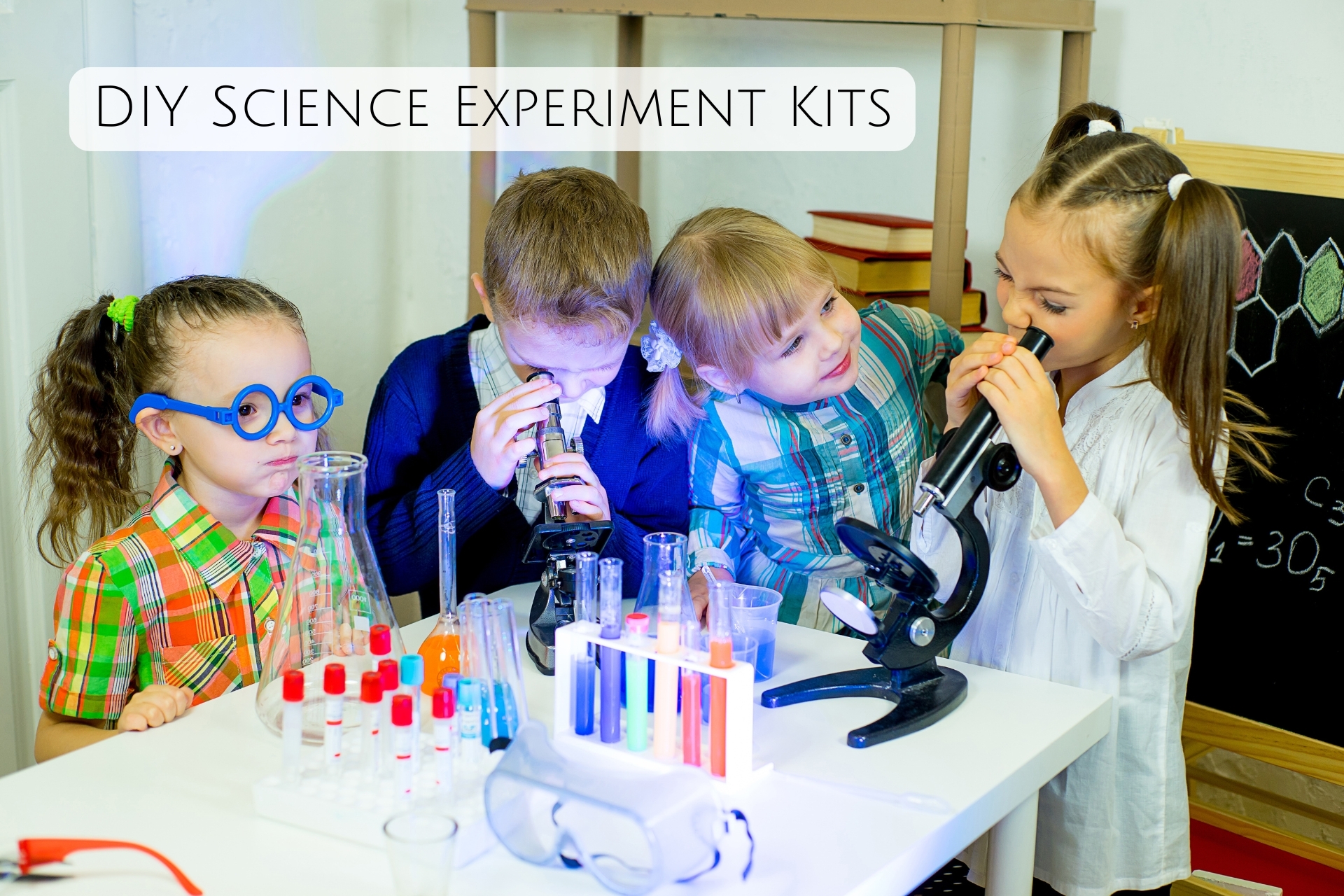
Science kits bring the laboratory home. These range from chemistry sets and crystal-growing kits to biology dissections and astronomy projects. For example, a volcano science kit lets kids mix baking soda and vinegar to see real chemical reactions, and a classic chemistry kit might include test tubes and color-changing chemicals. Even simple projects – like making slime – teach basic science: as one parent guide notes, “making slime can teach kids basic chemistry concepts”. Geology kits (rock tumblers, gem sets) and magnifying kits (microscopes, nature labs) are other great options. By following instructions and then experimenting, children learn the scientific method firsthand. STEM experts emphasize that these activities promote investigation and curiosity: they “inspire curiosity, an investigative spirit, and a love for discovery,” skills valuable in school and beyond.
-
Mechanical Engineering Toys:
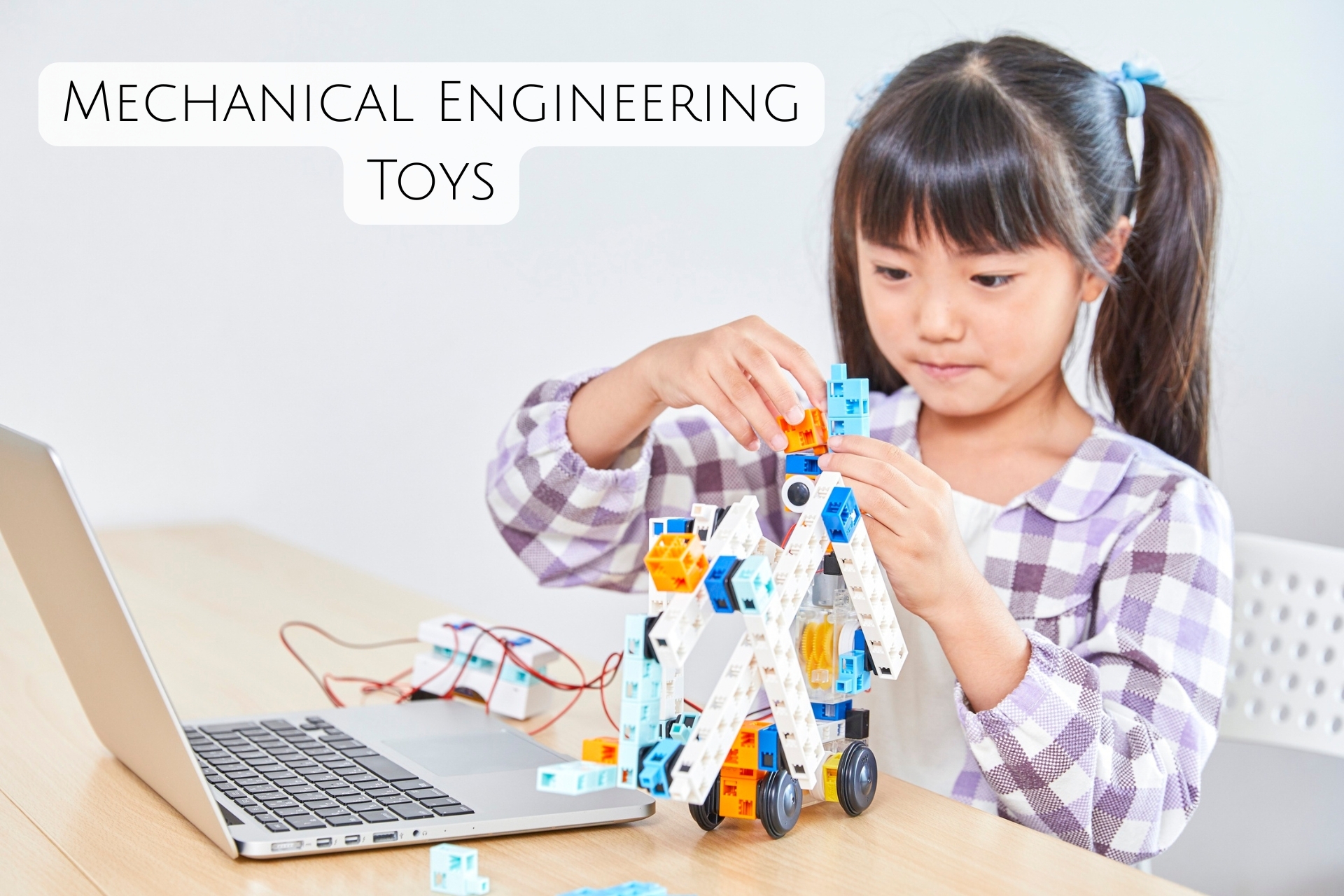
Kits like hydraulic robot arms or gear sets teach mechanical engineering principles through hands-on building. These are toys that move and build in interesting ways – think gearboxes, cranes, catapults, or hydraulic arms. For instance, a hydraulic robot-arm kit (as pictured above) comes with syringes, tubing, and a boom that moves using water pressure. By assembling the arm and controlling fluid flow, kids learn about force and leverage. Gears-and-pulley sets work similarly: as children mesh gears together or install batteries in motors, they see physics in action. These construction toys tend to be more open-ended, so they encourage trial-and-error and problem-solving. They also fit the definition of STEM play because, as researchers note, such hands-on building promotes creative exploration and experimentation. In short, working with mechanical parts is a fun way to deepen understanding of engineering basics.
-
Math and Puzzle Games:
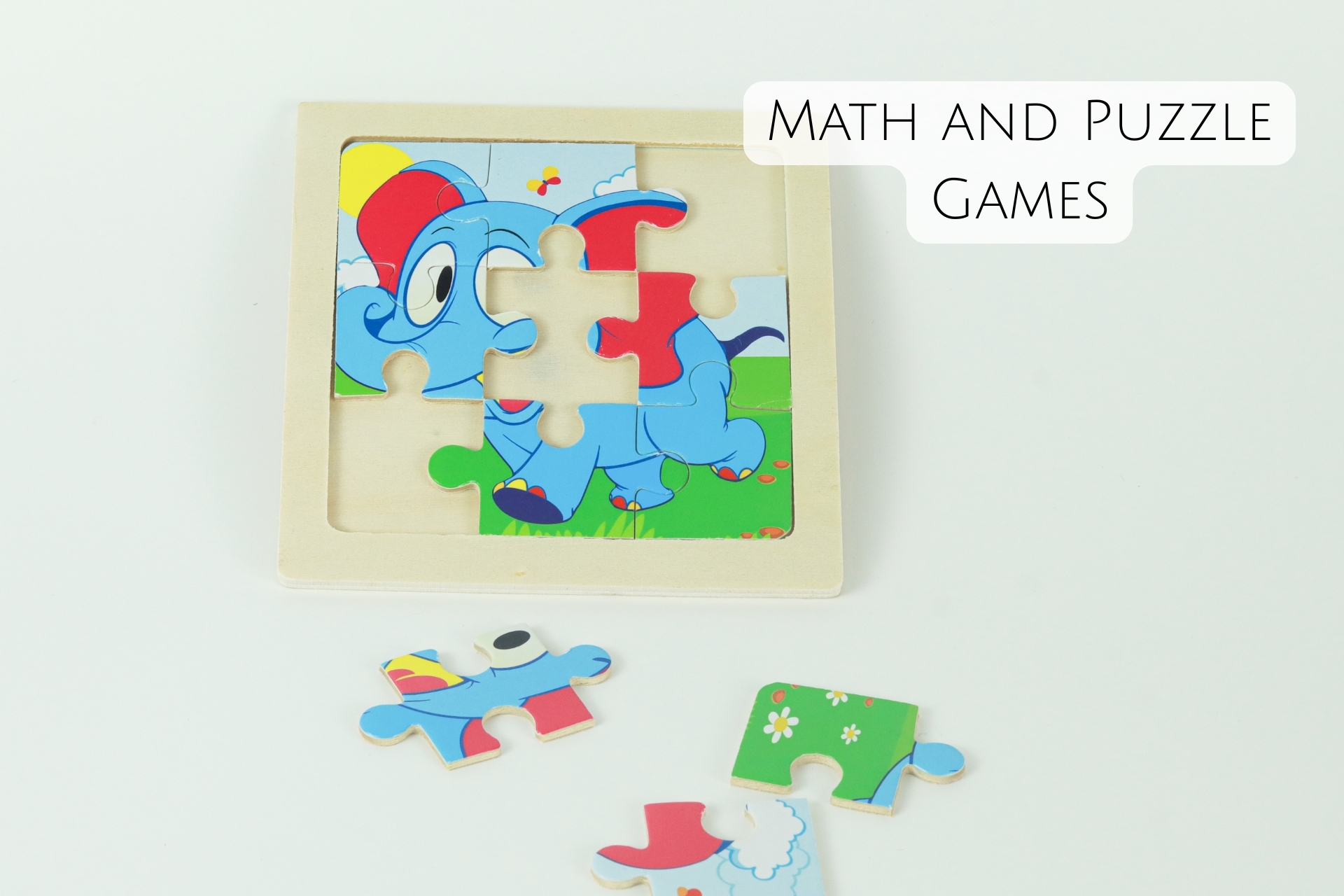
Finally, don’t overlook games that strengthen math and logic through play. Classic manipulatives like counting bears, geometric tangrams, or pattern blocks turn abstract math into colorful play. Puzzle games – from Sudoku-like number puzzles to 3D spatial puzzles – challenge kids’ reasoning and patience. Even simple pretend-play tools count: for example, playing store with a toy cash register “gives kids experience with basic arithmetic,” reinforcing math skills in context. Digital apps or board games that weave in math challenges can also be great. The key is that, by the time kids associate numbers and problem-solving with fun, they build confidence that carries into classroom learning.
How Chimiya Unlocks STEM Learning's Full Potential: Your Complete Educational Toy Destination:
Chimiya stands as India's premier destination for comprehensive STEM toys and games, curating an exceptional collection that transforms learning from obligatory to exhilarating. From beginner-friendly coding robots like Botley and Ozobot that introduce programming logic through engaging visual interfaces, to advanced robotics competition kits requiring complex engineering and strategic problem-solving, Chimiya provides every tool children need to develop 21st-century competencies. The store's extensive Toys & Games category features construction systems—magnetic tiles, K'NEX sets, LEGO engineering platforms—enabling spatial reasoning development; hands-on science experiment kits exploring chemistry, physics, and biology; and strategic logic games enhancing mathematical and analytical thinking.
Beyond individual toys, Chimiya offers complete STEM collections enabling progression from beginner exploration through advanced specialization, with curated recommendations matching developmental stages and learning objectives. Whether you're seeking engineering kits for hands-on learners, coding robots for future programmers, DIY maker kits fostering innovation and creativity, or competition robotics systems developing collaboration and resilience, Chimiya delivers premium-quality educational toys with free shipping across India. The store's expert guidance, detailed product descriptions, and thoughtfully organized categories make selection intuitive, enabling parents, educators, and gift-givers to confidently invest in toys that don't just entertain but truly transform how children learn, think, and grow. By shopping at Chimiya, you're accessing a complete STEM learning ecosystem where every product has been selected to maximize cognitive development, inspire genuine curiosity, and prepare children for success in an increasingly technology-dependent world—ensuring that learning becomes an adventure rather than an obligation.
Conclusion:
STEM toys do more than entertain – they nurture critical skills. When children play with science and engineering toys, they’re “learning, developing, and practicing new skills,” as education experts emphasize. Each of the seven toy types above turns abstract concepts into tangible exploration. By choosing engaging STEM toys, parents give kids a head start on problem-solving and creativity that will pay off in school and beyond. With resources like Chimiya’s STEM collection, it’s easier than ever to bring this kind of play into everyday life. Ultimately, these toys show that learning CAN be played – opening new worlds of discovery just beyond the building blocks.
Knowledge Hub

Air Fryer vs OTG: Which One Makes More Sense for an Indian Kitchen?
Your mother-in-law swears by the OTG she's used for fifteen years. Your Instagram feed insists you n...

How to Choose Nonstick Bakeware That Actually Lasts
Introduction: Most people don't think much about bakeware until something goes wrong — a cake that w...

Choosing the Right Kitchen Knife Set for Your Home
Introduction: Walk into most Indian kitchens and you'll find the same story: a drawer full of knives...

Pack Smart for Your Next Fly Fishing Adventure: The Essential Tackle & Backpack Guide
Introduction: A successful fly fishing trip starts long before you cast your first line. Whether you...

The Complete Pet Supplies Guide: Everything You Need for Every Kind of Pet
Introduction: Do you have a pet at home? Maybe you have a dog, a cat, a bird, a fish, or even a hors...

Gear Up for Adventure: A Beginner's Essential Camping Packing Guide
Introduction: Camping is an exciting way to connect with nature, but a little planning goes a long w...