
Cast Iron vs Stainless Steel vs Non-Stick: When to Use Each
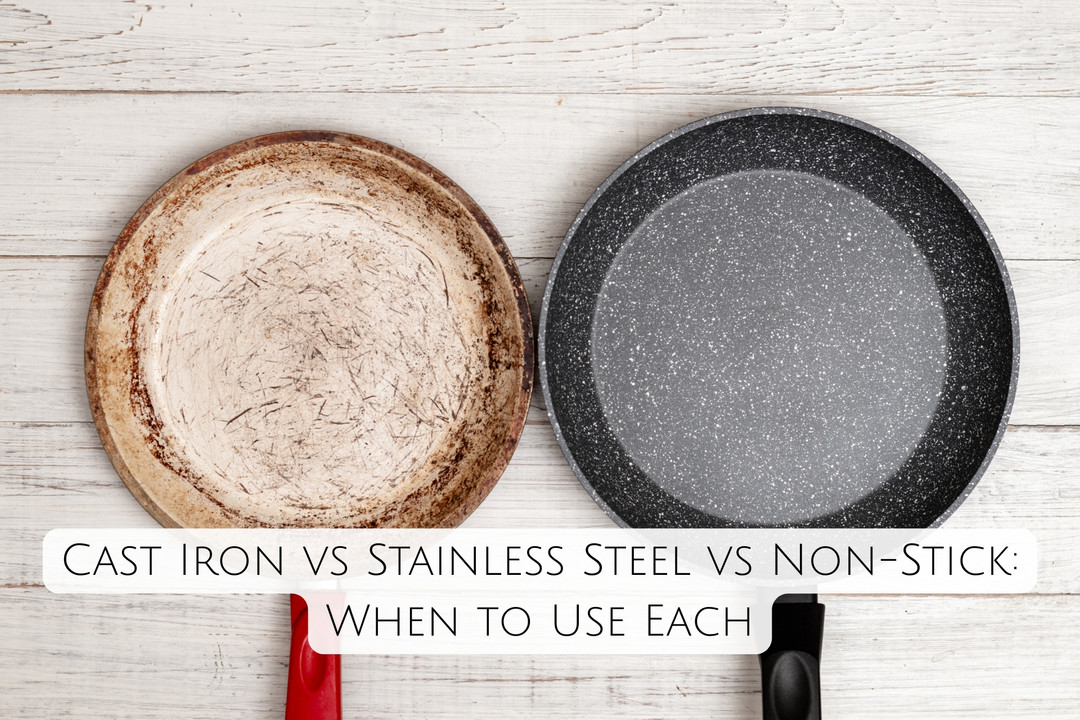
Every Indian kitchen ends up with some combination of all three — a heavy iron kadhai from your grandmother's era, a set of steel pots that never seem to wear out, and at least one non-stick pan for the days you just want breakfast to be easy. Rarely does anyone actually explain why you'd reach for one over the other.
This isn't really a "which is best" question. Each material solves a different cooking problem, and using the wrong one for the job is usually why a dish doesn't turn out quite right — or why a good pan wears out faster than it should. Let's break it down properly.
TL;DR
✓ Cast iron holds heat best — ideal for tadka, searing, and dosas, but needs seasoning upkeep.
✓ Stainless steel is the safest, most versatile daily option — no coating, no seasoning, handles everything.
✓ Non-stick needs the least skill but wears out fastest — best kept for eggs and low-oil cooking.
✓ Most kitchens end up needing all three, used for different jobs, not one "winner."
- Why This Isn't a One-Winner Debate:
A lot of kitchen content frames cookware material as a competition — pick the best one and move on. That's the wrong way to think about it. Cast iron, stainless steel, and non-stick each solve a different cooking problem, and using the wrong one for the job is usually why a dish doesn't turn out right, or why a good pan wears out faster than it should.
Understanding the actual differences — not just marketing claims — also saves money. A lot of kitchen upgrades happen because a pan "stopped working" when really it was just being asked to do a job it was never designed for.
- Cast Iron: The Heavyweight Workhorse
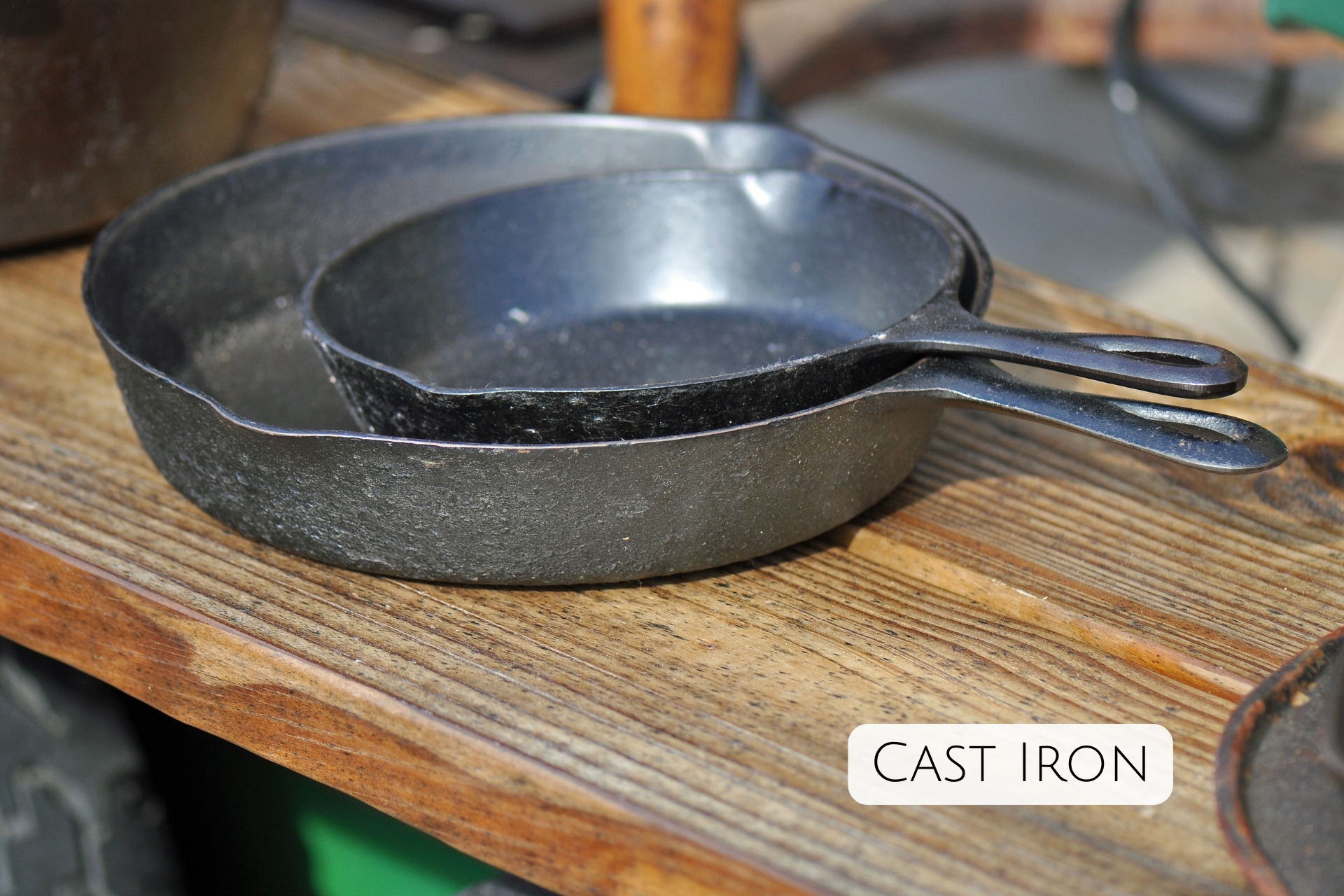
Cast iron is essentially raw iron cast into a pan shape, then seasoned with oil to build up a natural, semi non-stick surface over time. It's been a fixture in Indian kitchens for generations, particularly in South Indian households where dosa tawas are often passed down rather than bought new.
What makes cast iron genuinely different is that it improves with correct use instead of degrading. Every dosa, every seared vegetable, every round of oil and heat adds another layer to the seasoning — which is why a pan used daily for twenty years often performs better than one bought last month.
It's worth noting how differently this material is treated across Indian kitchens regionally. In Kerala, the traditional cheena chatti and meen chatti are cast iron for exactly this reason — the heat retention suits fish frying and slow-cooked curries that need sustained, even temperature.
Where It Wins:
✓ Heat retention is unmatched. Once hot, cast iron stays hot — ideal for searing, deep frying, and high-heat tempering where you need consistent temperature.
✓ It gets better with age. A well-seasoned pan develops a smoother, more effective surface over years — the opposite of how coatings behave.
✓ It's essentially indestructible. Metal utensils, high heat, aggressive scrubbing — cast iron tolerates all of it without degrading.
Where It Falls Short:
✓ It's heavy, which matters if you're cooking one-handed or have limited grip strength.
✓ It needs seasoning upkeep. Left wet or unseasoned, it rusts — a real ongoing habit, not a one-time task.
✓ It reacts with acidic food. Tomato-heavy or tamarind-based dishes can strip seasoning over extended cooking.
How to Actually Season It:
✓ Coat lightly with oil after every wash, while the pan is still warm, to slowly build the seasoning layer.
✓ Never leave it soaking wet. Dry it immediately, ideally on low heat for a minute, since moisture causes rust.
✓ Go easy on soap early on, though a well-seasoned pan years in can tolerate mild soap fine.
- Stainless Steel: The Reliable Daily Default
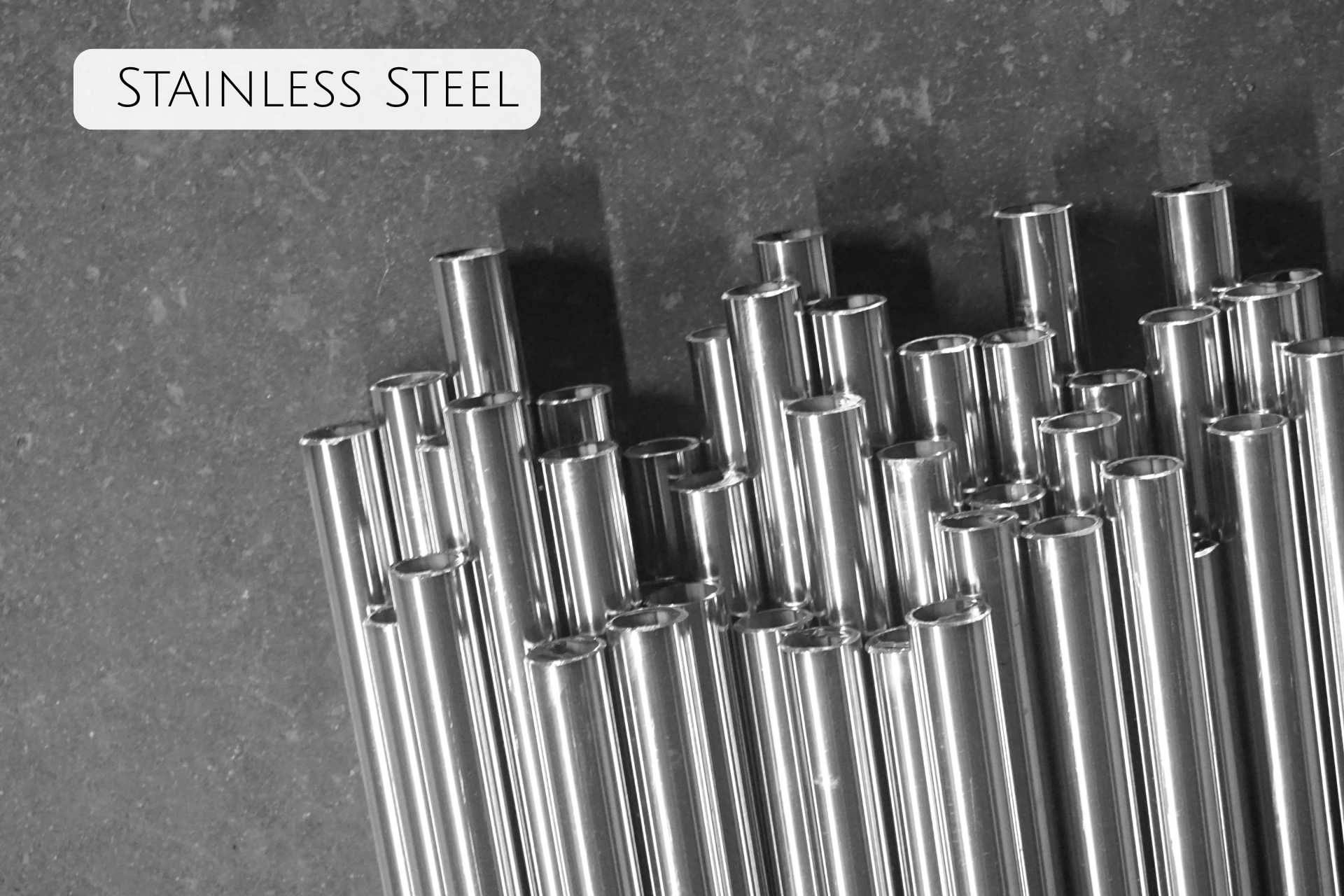
Stainless steel is an alloy, typically combining iron with chromium and nickel, engineered specifically to resist corrosion and reactivity. It has no coating to wear off and no seasoning to maintain, which is exactly why it's the safest, most forgiving choice for everyday cooking.
It's also the material most Indian households already own the most of, even if they don't think about it that way — pressure cookers, kadhais, and thalis are overwhelmingly steel, a preference that goes back generations for practical reasons, not just tradition.
Quality varies a lot within "stainless steel" as a category, though. Single-ply steel is cheap but heats unevenly; tri-ply or five-ply construction, with an aluminum or copper core sandwiched between steel layers, distributes heat far more evenly and is worth the extra cost for pieces you'll use daily.
Where It Wins:
✓ It handles nearly everything. High heat, acidic curries, pressure cooking, metal utensils — steel tolerates the full range of Indian cooking without real restrictions.
✓ It's low-maintenance. No seasoning, no special products, dishwasher-safe in most cases.
✓ It lasts essentially forever when reasonably cared for, making the higher upfront cost a genuinely good long-term value.
Where It Falls Short:
✓ Food sticks more easily without proper preheating technique, which takes a bit of practice.
✓ It heats less evenly than cast iron unless it has a good multi-layered base — thinner, cheaper pans can develop hot spots.
- Non-Stick: The Convenience Option
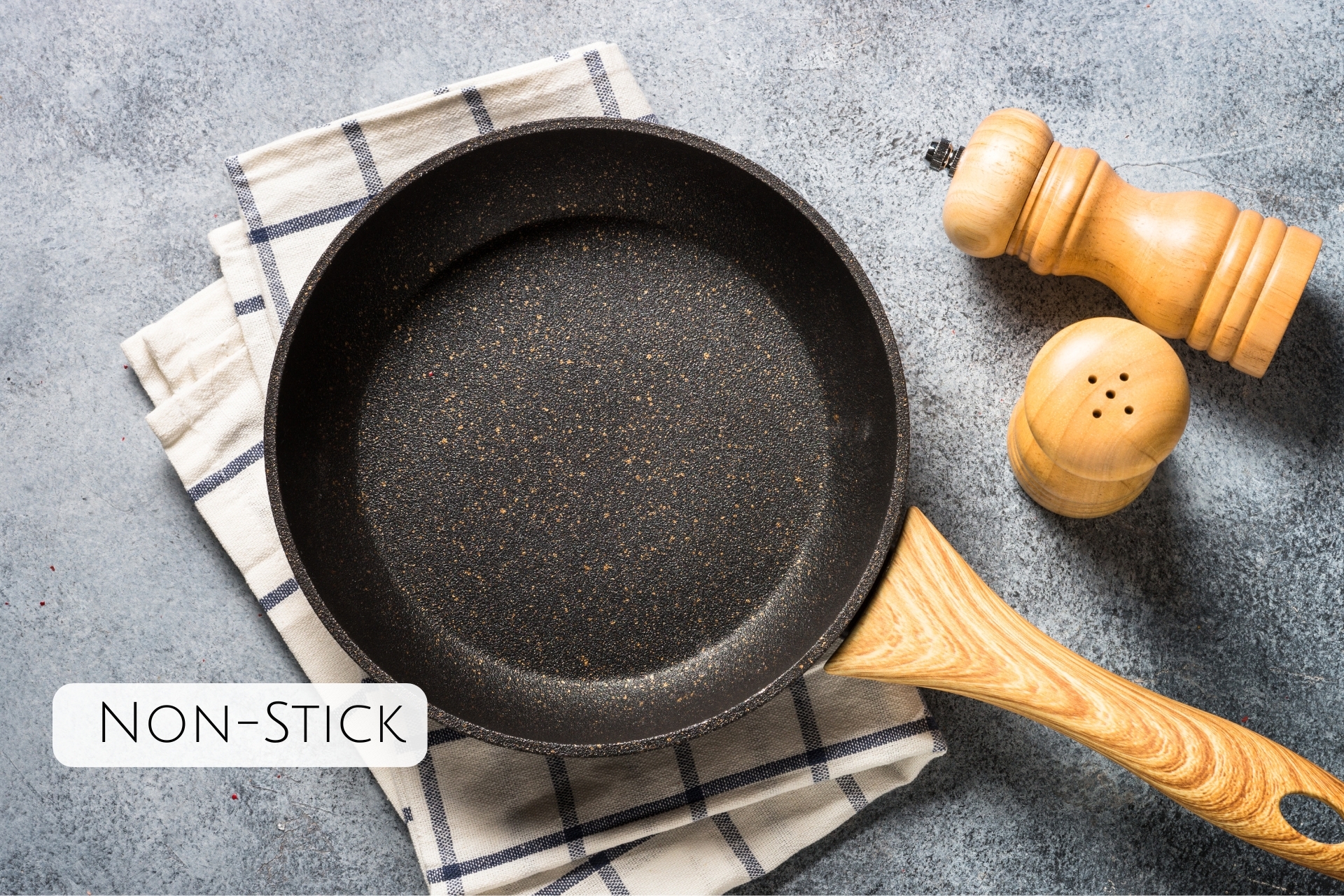
Non-stick cookware uses a coating — typically PTFE, sometimes ceramic — over an aluminum or steel base, designed purely to prevent food from sticking without needing much oil. It's the newest of the three materials in most kitchens, and the one with the shortest realistic lifespan.
It's worth being clear-eyed about what non-stick actually is: a convenience layer, not a permanent upgrade. Treating it that way — replacing it on a schedule rather than waiting for visible damage — is the difference between using it safely and using it well past when it should've been retired.
This is also the material where price and quality diverge the most within a category. A well-made mid-range non-stick pan with a thicker base and reinforced coating genuinely outlasts a cheap one by a wide margin, even though both look similar on a store shelf.
Where It Wins:
✓ Nothing sticks, genuinely. Eggs, fish, delicate items slide out cleanly, which matters where presentation counts.
✓ It needs far less oil, a real, practical benefit for anyone managing oil intake.
✓ It's beginner-friendly, with very little technique required to avoid sticking.
Where It Falls Short:
✓ The coating wears out. Even with careful use, most pans need replacing every 2-3 years.
✓ It can't handle high heat, which limits how it fits into tadka, searing, and deep frying.
✓ It demands gentle handling — no metal utensils, no aggressive scrubbing, no empty-pan preheating.
- What to Check Before Buying:
✓ For stainless steel: look for 18/8 or 18/10 grade steel, and a magnetic base indicating a layered aluminum or copper core for better heat distribution.
✓ For non-stick: confirm the coating is PFOA-free — standard for most reputable brands now. Ceramic avoids PTFE entirely but wears out faster.
✓ For cast iron: pre-seasoned pans save the initial seasoning process, but check for a smooth, even casting — rough surfaces make seasoning and cleaning harder.
- Matching Material to the Dish:
✓ Tadka and deep frying: cast iron or heavy-bottomed steel, both built for sustained high heat.
✓ Curries, dal, and pressure cooking: stainless steel, for acid resistance and durability.
✓ Dosas and rotis: a seasoned cast iron tawa once you've built up the seasoning, or non-stick for zero learning curve.
✓ Eggs and delicate fish: non-stick, where the low-stick surface genuinely earns its place.
✓ Everyday sautéing: stainless steel is the safe, versatile default.
- Building a Kitchen With All Three:
You don't need to pick a winner — realistically, most well-equipped Indian kitchens use all three materials for different jobs, and that's not indecision, it's matching the right tool to the right task.
If you're starting from scratch, prioritize stainless steel first, since it covers the widest range of everyday cooking. Add cast iron once you're ready to commit to the seasoning routine, and keep one good non-stick pan specifically for eggs and delicate items rather than trying to make it your all-purpose pan.
- The Real Cost Comparison:
Sticker price alone is a misleading way to compare these three, since it ignores how often each one needs replacing. Run the numbers over five or ten years, not just the day of purchase, and the picture changes considerably.
✓ Cast iron costs moderately upfront and essentially never needs replacing with proper care — the best long-term value on this list, assuming you're willing to maintain the seasoning.
✓ Stainless steel costs more upfront for quality pieces but also lasts decades, making the cost-per-year genuinely low over time.
✓ Non-stick costs the least upfront but needs replacing every 2-3 years, which means the five-year cost often matches or exceeds a piece of quality steel bought once.
None of this means non-stick is a bad buy — it just means budgeting for replacement should be part of the decision, not a surprise a few years in.
- FAQs
Q: Can you use metal utensils on any of these?
A: Freely on cast iron and stainless steel. Never on non-stick, where even careful metal use accelerates coating wear.
Q: Which one is safest for daily cooking?
A: Stainless steel, without much competition — no coating to degrade, no seasoning to maintain.
Q: Does cast iron really add iron to food?
A: Yes, in small measurable amounts, especially with acidic ingredients cooked longer. A genuine bonus, not a substitute for dietary iron.
Q: Is ceramic non-stick actually safer than PTFE?
A: It avoids PTFE and PFOA entirely, but the coating typically degrades faster — you're trading one concern for a shorter replacement cycle.
Q: Can cast iron and stainless steel go in the dishwasher?
A: Stainless steel generally can. Cast iron shouldn't — the harsh detergent and prolonged water exposure strip seasoning and invite rust, so it's better hand-washed and dried immediately.
Q: Why does food stick to a brand-new stainless steel pan?
A: Usually a preheating issue, not a defect — steel needs to reach temperature before oil and food go in. The classic test: a drop of water should sizzle and roll, not sit still or evaporate instantly.
- The Bottom Line
Cast iron, stainless steel, and non-stick aren't competing for the same job, even though they often get compared like they are. Cast iron rewards patience and high heat. Stainless steel handles almost everything reliably, with the least fuss. Non-stick trades durability for convenience on the specific dishes where sticking is genuinely a problem.
Stop trying to find the one "best" material and start matching cookware to what you're actually cooking. A kitchen with all three, used for their strengths, will consistently outperform a kitchen built entirely around just one — no matter how good that one pan claims to be.
Knowledge Hub

Do Garden Grow Bags Actually Work Better Than Pots?
You're scrolling through a gardening page, and there it is again — another post insisting grow bags...
Cast Iron, Stainless Steel & Non-Stick
Every Indian kitchen ends up with some combination of all three — a heavy iron kadhai from your gran...
Cast Iron vs Stainless Steel vs Non-Stick: When to Use Each
Every Indian kitchen ends up with some combination of all three — a heavy iron kadhai from your gran...
700W vs 1000W Mixer Grinder: What the Wattage Actually Buys You — and When It Doesn't
Stand in any appliance aisle in India and you'll see the same little ritual. Someone picks up a mixe...
7 Kitchen Gadgets Indians Actually Use Every Day
Open any Indian kitchen drawer and you'll find at least one appliance still in its box, bought durin...
Air Fryer vs OTG: Which One Makes More Sense for an Indian Kitchen?
Your mother-in-law swears by the OTG she's used for fifteen years. Your Instagram feed insists you n...