
Do Vegetable Choppers Really Save Time, or Just Move It to Cleanup? An Honest Minutes-Per-Meal Breakdown
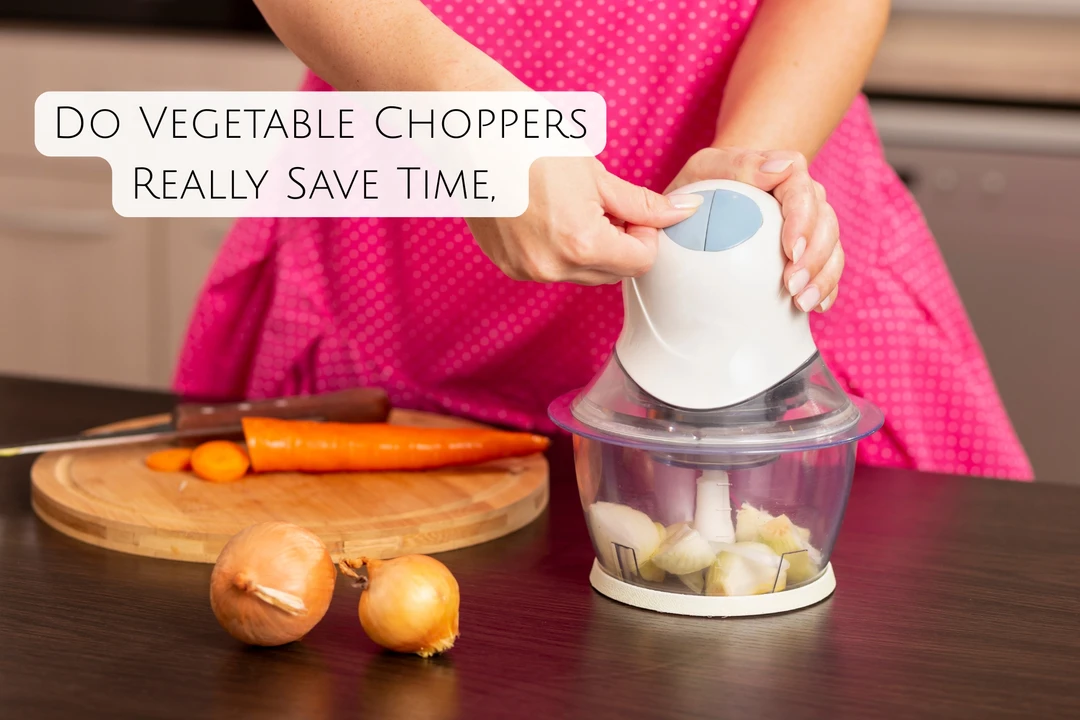
It's 7:40 pm. The pressure cooker is hissing, someone's asking what's for dinner, and you're standing at the counter with two onions, a handful of beans, and a knife that hasn't been sharpened since Diwali. This is exactly the moment a vegetable chopper is sold for. Pull the cord, press the lid, and your sabzi prep is done in seconds — or so the ads say.
But here's the question nobody puts on the box: does a vegetable chopper actually save you time across the whole meal, or does it quietly shift those minutes from the cutting board to the kitchen sink? Let's do the honest math, stopwatch-style.
Quick answer: A vegetable chopper saves roughly 3–6 minutes per meal on chopping itself, but adds 2–4 minutes of washing and drying. Net savings are real only when you chop large quantities — two or more onions, or mixed vegetables for a family meal. For a single tomato or one green chilli, your knife is faster.
How Much Time Does a Vegetable Chopper Actually Save Per Meal?
To answer this properly, you can't just time the chopping. You have to time the whole loop: taking the gadget out, assembling it, chopping, disassembling, washing, drying, and putting it back. That's the number that decides whether the chopper earns its shelf space in your kitchen.
So here's a realistic minutes-per-meal breakdown for a typical Indian weeknight dinner — say, a bhindi sabzi, dal with tadka, and a quick kachumber salad. Two onions, three tomatoes, coriander, green chillies, and the bhindi itself.
The Knife-Only Version:
- Two onions, finely chopped — 4 to 5 minutes for most home cooks, plus the tears. A genuinely sharp knife brings this down to 3, but most household knives in India are not genuinely sharp.
- Three tomatoes, roughly chopped — About 2 minutes. Tomatoes are quick because rough is fine for most gravies.
- Coriander, chillies, ginger, garlic — 3 to 4 minutes combined, mostly the garlic peeling.
Cleanup — Rinse one knife and one chopping board — about 1 minute. - Knife-only total: roughly 10 to 12 minutes of prep, 1 minute of cleanup.
The Chopper Version:
- Take out and assemble — 30 to 45 seconds if it lives in an accessible drawer. Closer to 2 minutes if it's buried behind the mixer-grinder on the top shelf — and be honest, that's where a lot of gadgets end up.
- Two onions — Quarter them first (that's 45 seconds of knife work you still do), then 20 to 30 seconds of pulling or pulsing.
- Tomatoes, coriander, chillies, garlic — Another 1 to 2 minutes in batches, because a manual chopper handles one type of vegetable well at a time.
- Cleanup — Bowl, blade, and lid — 2 to 4 minutes. The blade needs careful handling, and coriander stems love wrapping themselves around the shaft.
Chopper total: roughly 4 to 6 minutes of prep, 2 to 4 minutes of cleanup.
Net result for this meal: the chopper saves you around 3 to 5 minutes overall, and it saves your eyes from two onions' worth of crying. That's a genuine win — but notice it's a smaller win than the “chops in 10 seconds!” marketing suggests, because cleanup eats back nearly half the savings.
Where the Time Hides: The Cleanup Problem Nobody Advertises:
If you've ever wondered how to clean a vegetable chopper quickly, you've already discovered the catch. Chopper cleanup is not one item — it's three to five: the bowl, the blade assembly, the lid, sometimes a pull-cord mechanism, and for electric models, a motor head you can't submerge.
Each part is small, curved, and full of crevices. Onion juice pools under the blade hub. Ginger fibres lodge in the lid mechanism. And in most Indian kitchens, these parts are washed by hand — dishwashers are still rare here — which means every extra component is your time, not a machine's.
There's also a hidden cost that stopwatches miss: drying. In coastal cities like Mumbai, Chennai, or Kochi, humidity means plastic parts stay damp for hours on the rack. Reassemble a chopper wet even a few times and you'll get that musty smell in the bowl — and then you're washing it again before use, which is negative time savings.
The honest accounting rule is simple: every minute the chopper saves at the cutting board, subtract 40 to 60 seconds at the sink. If the chopping job is big, you still come out ahead. If the job is small, you don't.
Manual vs Electric Vegetable Chopper for Indian Kitchens: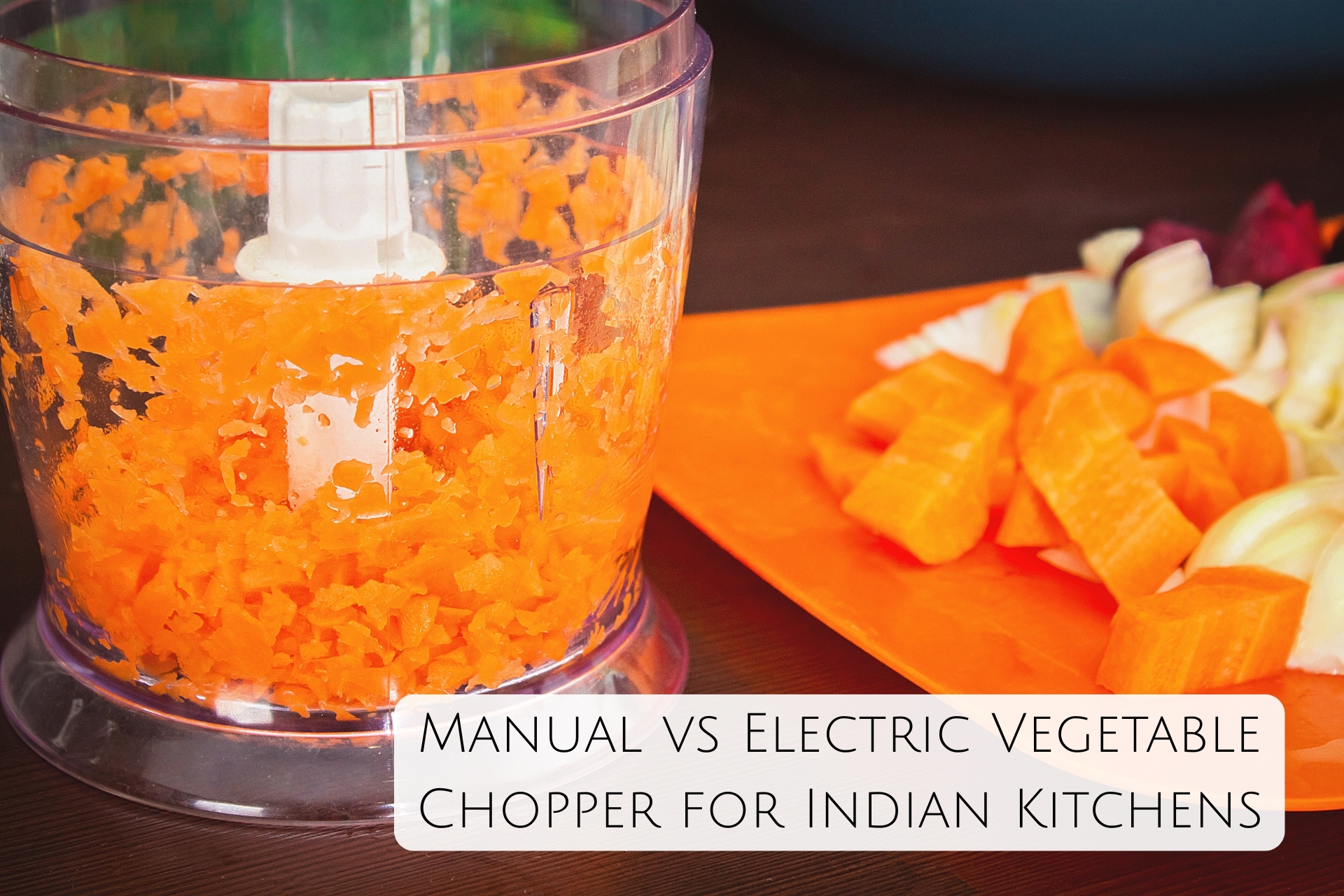
The manual vs electric vegetable chopper debate matters more in India than in most Western kitchens, because our cooking style is different. We don't chop one large salad a day — we chop small quantities of many things, twice a day, often with the gas already on.
Manual (String-Pull) Choppers: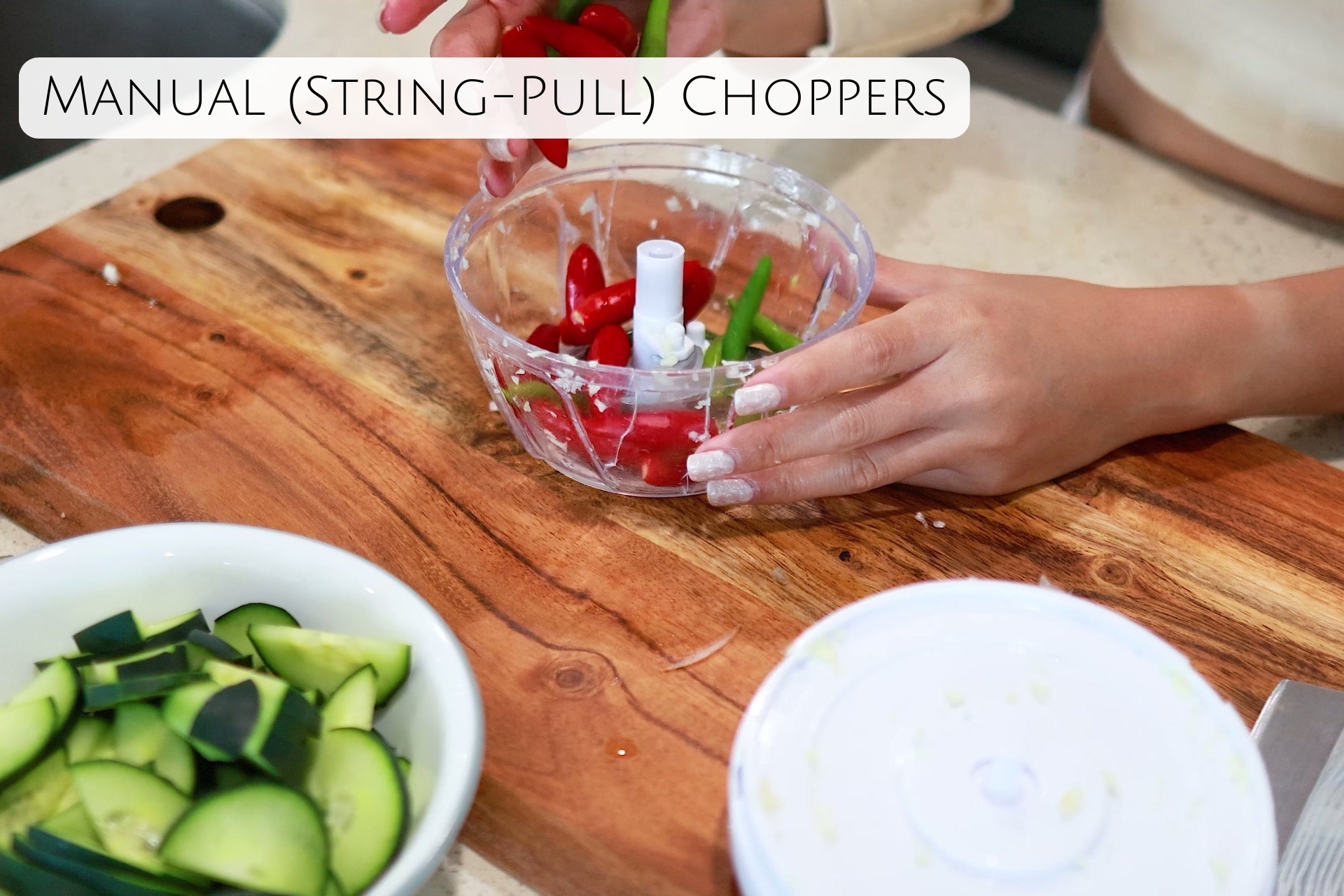
- Speed — Excellent for onions, tomatoes, and chillies. Ten to fifteen pulls gets you a fine chop.
- Cleanup — Three parts, all washable, usually 2 to 3 minutes. No motor housing to keep dry.
- Power cuts and portability — Works everywhere, including during load-shedding and in PG rooms and hostels where an extra appliance isn't practical.
- Weak spot — The cord mechanism is the first thing to fail on cheap models, typically within 8 to 12 months of daily use. Buy one with a metal gear assembly if you can find it.
Electric Mini Choppers:
- Speed — Fastest for volume — half a kilo of onions for biryani or a big batch of chutney base in under a minute.
- Cleanup — Bowl and blade wash easily, but the motor head only gets a wipe-down, and cords annoy small kitchens.
- Weak spot — Over-processing. Two extra seconds and your onions turn to paste, which then releases water into the kadhai and steams instead of browning. If your bhuna never browns properly, this might be why.
And a fair note for the traditionalists: many Indian home cooks already own the most powerful chopper of all — the mixer-grinder. A couple of pulses in the chutney jar chops onions fine. The trade-off is the same cleanup problem, plus a jar that now smells of onion when you next make coconut chutney.
When a Chopper Is Worth It — and When Your Knife Wins:
So are vegetable choppers worth it for Indian cooking? Yes — conditionally. The break-even point is volume. Here's the simple decision rule based on the timings above:
- Chopper wins — Two or more onions, kachumber or salad for four people, chutney bases, keema-style fine chopping, poha or upma vegetables in bulk, or Sunday meal-prep where you chop once for two or three meals.
- Knife wins — One tomato, one chilli, a knob of ginger, slitting vegetables for stuffing (bharwa bhindi, baingan), long julienne cuts, or anything where you need slices rather than dice — most choppers only dice.
- Nobody wins with paste — If you actually need paste — ginger-garlic, for example — skip the chopper and use the mixer's small jar with a spoon of water. Choppers make uneven paste and you'll clean two gadgets.
There's one more factor the stopwatch can't measure: consistency. A chopper gives you evenly sized pieces every single time, which means your vegetables cook evenly — no half-raw, half-mushy beans in the sabzi. For newer cooks, that consistency is arguably worth more than the minutes.
And if watery onions have been ruining your gravies, here's a practical tip regardless of which tool you use: after chopping onions finely, let them sit in a strainer for two minutes before they hit the oil. Less water in the pan means faster browning and a deeper base — you'll save cooking minutes downstream, which is where the real time lives anyway.
Five Habits That Make Any Chopper Genuinely Faster:
Whether you own a manual pull-chopper, an electric mini chopper, or you're still deciding, the tool is only half the equation. The other half is workflow. These five habits are what separate people who say their chopper “changed their life” from people whose chopper is gathering dust behind the pressure cooker.
- Store it within arm's reach — The single biggest predictor of whether a gadget gets used is where it lives. A chopper in the drawer next to the stove gets used daily; the same chopper on the loft shelf gets used at Diwali. Those 90 seconds of retrieval time kill the whole math.
- Wash it while the tadka splutters — The bowl and blade take under a minute to rinse if the onion juice hasn't dried. Wash immediately after tipping the vegetables into the pan and cleanup effectively costs you nothing, because you were standing at the stove anyway.
- Batch your chopping across meals — If you're already chopping onions for dinner, chop tomorrow morning's poha vegetables in the same session. One assembly, one wash, two meals. In an airtight box in the fridge, chopped onions keep for a day and capsicum for two — though in peak summer, use them within 24 hours.
- Cut to the right starting size — Choppers choke on whole onions and oversized chunks. Quartering first isn't cheating; it's the design. Fighting the tool with big pieces means more pulls, uneven results, and strain on the cord mechanism.
- Dry the blade separately — Stand the blade upright to air-dry rather than burying it in the dish rack. It dries faster, nobody grabs it by accident while reaching for a spoon, and in humid months it won't develop rust spots at the hub.
Follow even three of these and your real-world savings move from the 3-to-5-minute range toward 6 to 8 minutes per heavy-prep meal. Over a month of home cooking, that's roughly three hours back — enough to justify the drawer space several times over.
What We Look for in a Chopper at Kiwla:
At Kiwla, we test kitchen and wellness products the same way we wrote this article — with the full loop in mind, cleanup included. When we shortlist choppers for Indian homes, we reject more than we approve, and these are the four things a model has to get right before it makes our shelf:
- Three parts or fewer to wash — Every extra component is a minute at your sink. We prefer designs where the blade lifts out in one piece.
- Blades that stay sharp past six months — Stainless steel with a proper edge, not stamped blades that dull by the second wedding season.
- A bowl that doesn't stain — Turmeric and tomato are the true test of any Indian kitchen plastic. Stain-resistant or glass bowls only.
- A cord mechanism built for daily pulls — For manual models, we look for reinforced gears, because twice-a-day Indian usage is heavier than what most imported choppers are designed for.
If a chopper passes those four tests, the minutes-per-meal math above tilts firmly in its favour — fast chop, fast wash, no hidden time tax.
The Honest Verdict
Vegetable choppers do save time — just less than the ads claim and only when you use them for the right jobs. Expect a real-world saving of 3 to 5 minutes on a family meal with heavy onion-tomato prep, shrinking to zero (or worse) for small single-vegetable tasks once cleanup is counted.
The smartest setup for most Indian kitchens isn't chopper-or-knife. It's both, with a clear division of labour: knife for the small, precise, one-off cuts; chopper for volume, onions, and anything that makes you cry. Keep the chopper somewhere you can grab it in five seconds, wash it the moment you tip the vegetables into the kadhai, and dry it fully before it goes back.
Do that, and the minutes it saves are genuinely yours — not borrowed from the sink.
Knowledge Hub

Do Vegetable Choppers Really Save Time, or Just Move It to Cleanup? An Honest Minutes-Per-Meal Breakdown
It's 7:40 pm. The pressure cooker is hissing, someone's asking what's for dinner, and you're standin...

Do Garden Grow Bags Actually Work Better Than Pots?
You're scrolling through a gardening page, and there it is again — another post insisting grow bags...

Cast Iron, Stainless Steel & Non-Stick
Every Indian kitchen ends up with some combination of all three — a heavy iron kadhai from your gran...
Cast Iron vs Stainless Steel vs Non-Stick: When to Use Each
Every Indian kitchen ends up with some combination of all three — a heavy iron kadhai from your gran...

700W vs 1000W Mixer Grinder: What the Wattage Actually Buys You — and When It Doesn't
Stand in any appliance aisle in India and you'll see the same little ritual. Someone picks up a mixe...

7 Kitchen Gadgets Indians Actually Use Every Day
Open any Indian kitchen drawer and you'll find at least one appliance still in its box, bought durin...