
The Interconnection of Hydraulics, Pneumatics, and Plumbing: Understanding Fluid Power Systems
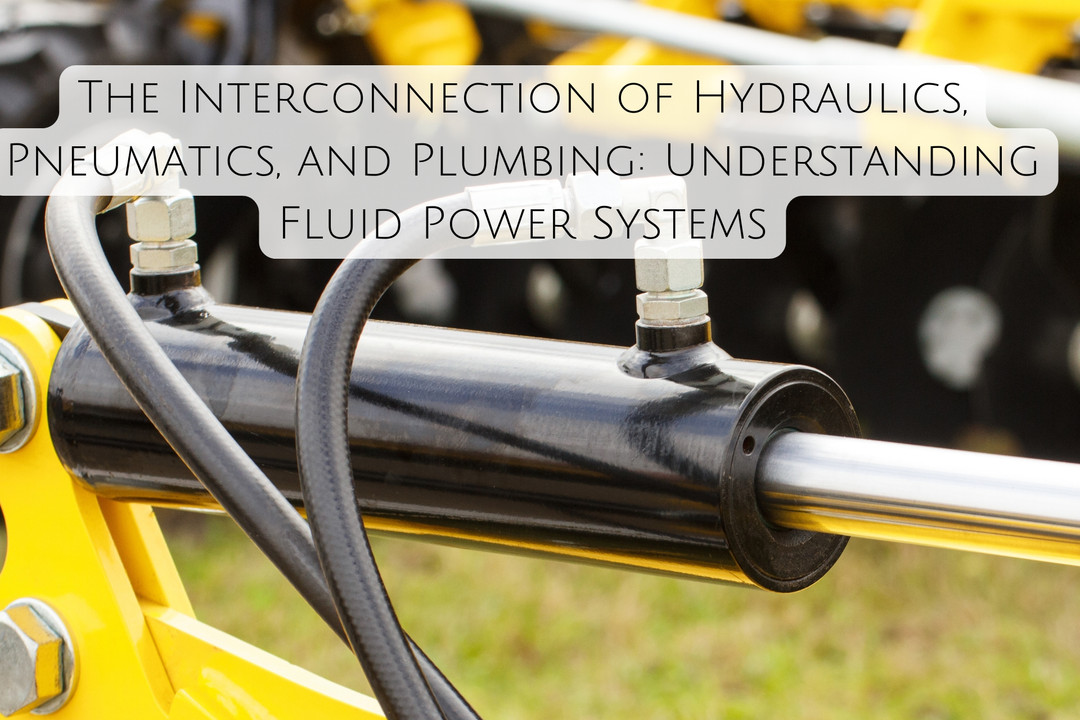
Fluid power systems are a cornerstone of modern technology, playing a crucial role in various industries, from manufacturing and construction to automotive and aerospace. Three key fluid power systems—hydraulics, pneumatics, and plumbing—rely on the principles of fluid dynamics to transmit power and control movements. While they differ in the type of fluid used and their specific applications, they share fundamental principles and are often interconnected in complex systems to maximize efficiency and performance.
In this article, we will explore the interconnections between hydraulics, pneumatics, and plumbing, shedding light on their similarities, differences, and how these systems collaborate in fluid power applications.
What is Fluid Power?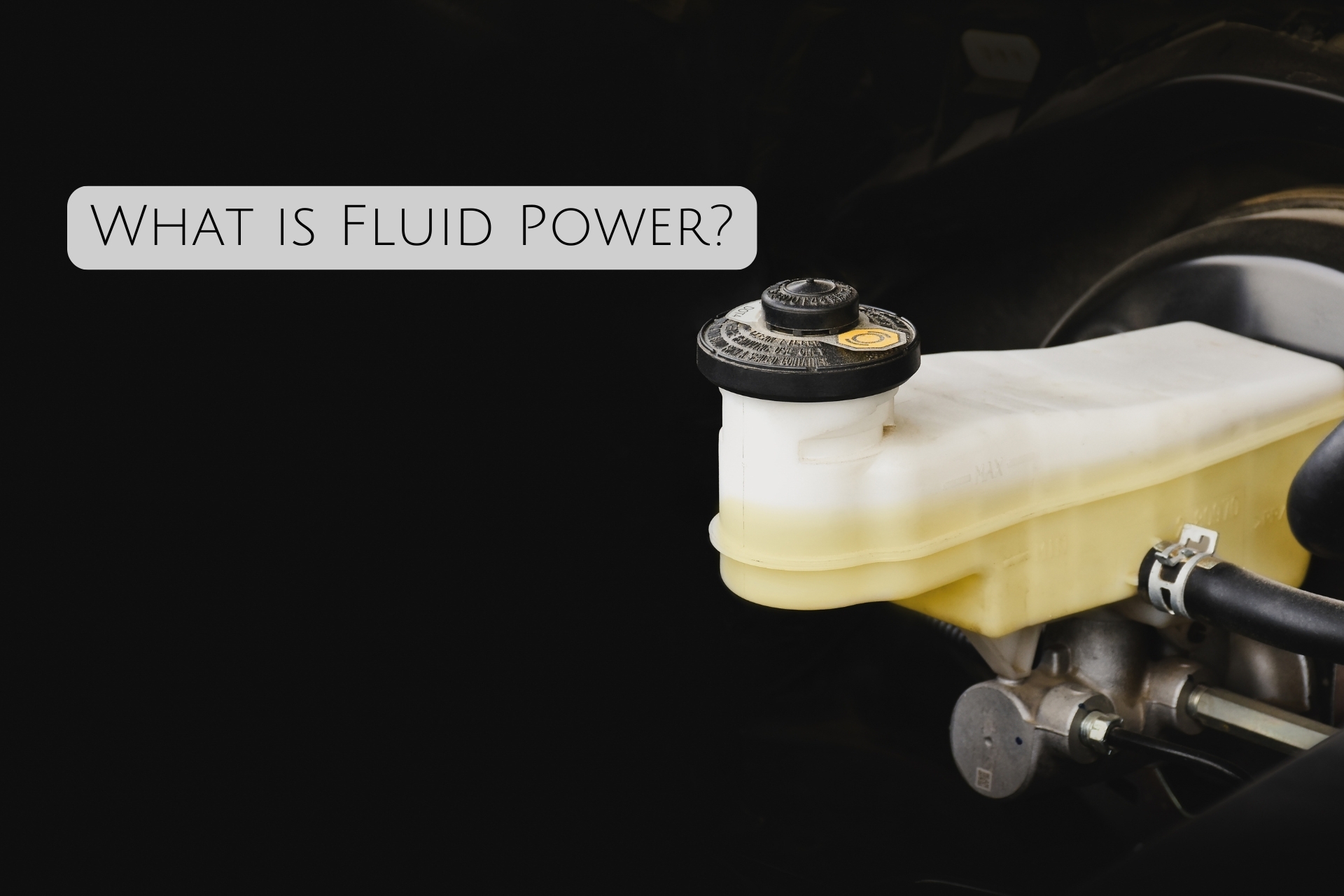
Fluid power is a technology that uses fluids—either liquid or gas—to generate, control, and transmit power. It operates on the principle that fluids are incompressible (in the case of liquids) or compressible (in the case of gases), and this ability allows for the efficient transfer of energy. Fluid power systems can provide high force, precise control, and reliable performance, making them essential for many mechanical operations.
Fluid power systems can be broken down into two categories:
- Hydraulic systems: Use liquids (typically oil or water) to transmit power.
- Pneumatic systems: Use compressed air or other gases to transmit power.
While hydraulics and pneumatics are both fluid power systems, plumbing plays a role in the delivery and management of fluids, making the three systems interconnected.
Hydraulic Systems: Power Through Liquids: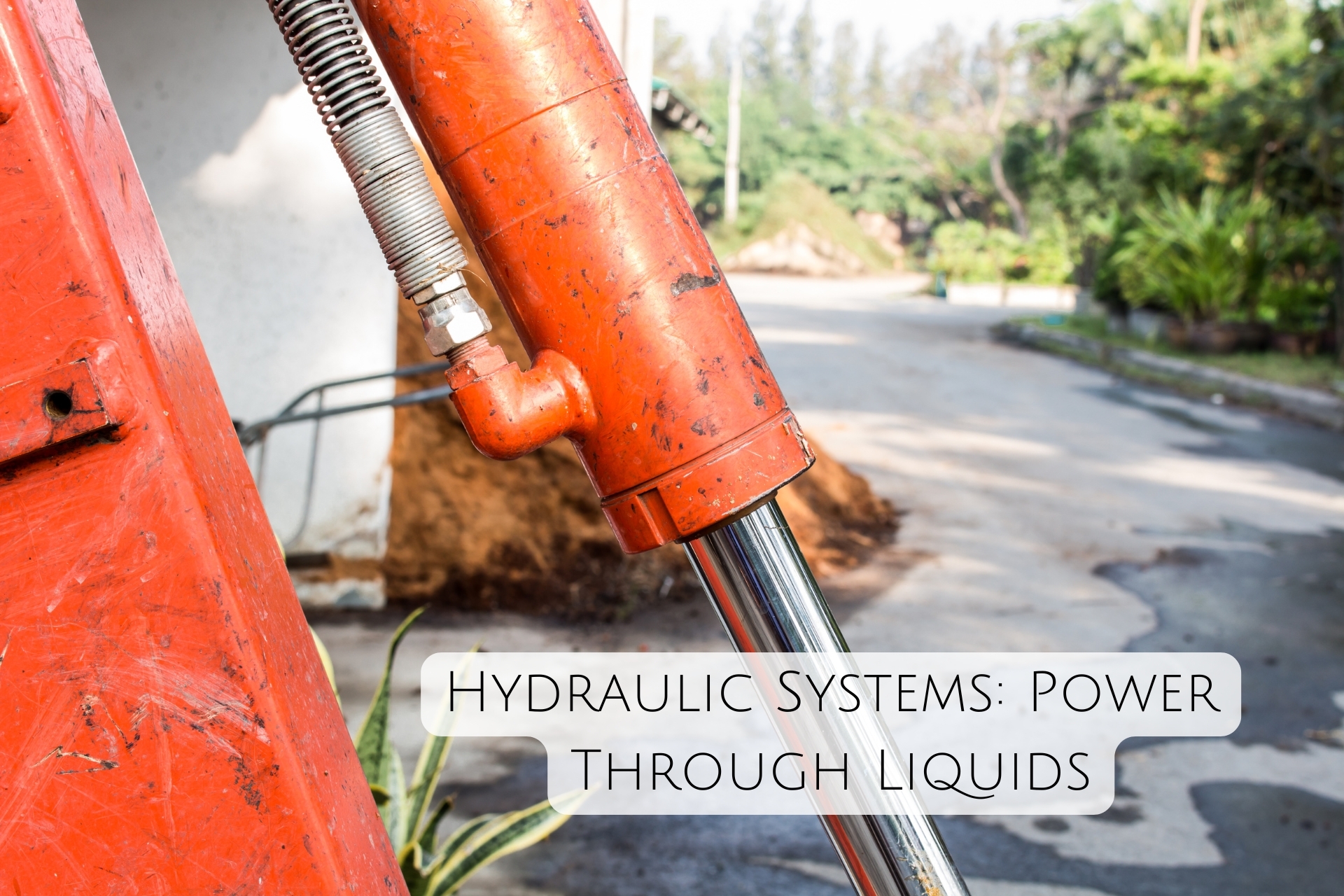
Hydraulics rely on pressurized liquids to transmit power. Commonly used in heavy machinery, industrial systems, and vehicle brakes, hydraulic systems are designed for high-force applications. They are especially useful in operations requiring precise control and high lifting capabilities.
Key Components of Hydraulic Systems:
- Hydraulic fluid: Typically oil, which serves as the medium to transfer power.
- Pump: Generates the pressure needed to move the hydraulic fluid.
- Valves: Regulate fluid flow to control the speed and direction of the system.
- Cylinders and actuators: Convert the hydraulic energy into mechanical motion.
- Reservoir: Holds the hydraulic fluid, allowing it to be recirculated through the system.
Hydraulic systems are commonly found in construction machinery, such as excavators and cranes, as well as in aircraft flight control systems and industrial presses.
Pneumatic Systems: Power Through Air: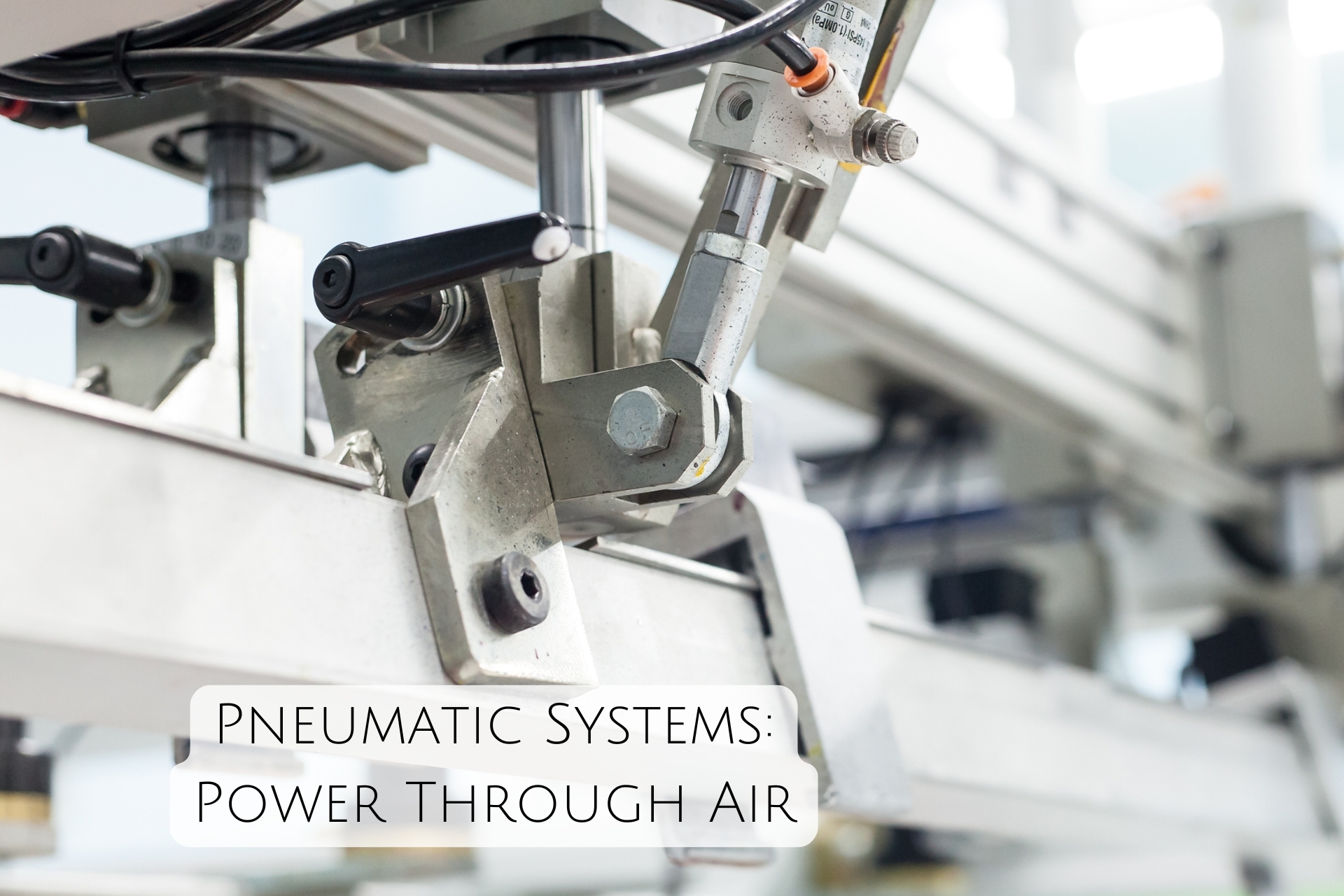
Pneumatic systems use compressed air to transmit power. These systems are lighter, less expensive, and simpler than hydraulics, but they are less powerful. Pneumatic systems are ideal for applications where high force is not required, but speed and efficiency are critical. Common applications include robotics, automated production lines, and tools like pneumatic drills and pumps.
Key Components of Pneumatic Systems:
- Compressor: Compresses air to a high pressure, stored in a tank.
- Air valves: Control the flow of compressed air through the system.
- Actuators: Convert the energy from the compressed air into mechanical work (e.g., cylinders).
- Air filtration: Ensures the compressed air is free of contaminants.
Pneumatics are widely used in assembly lines, medical devices (such as ventilators), and in applications requiring lightweight tools that need rapid motion.
Plumbing Systems: Distribution of Fluids: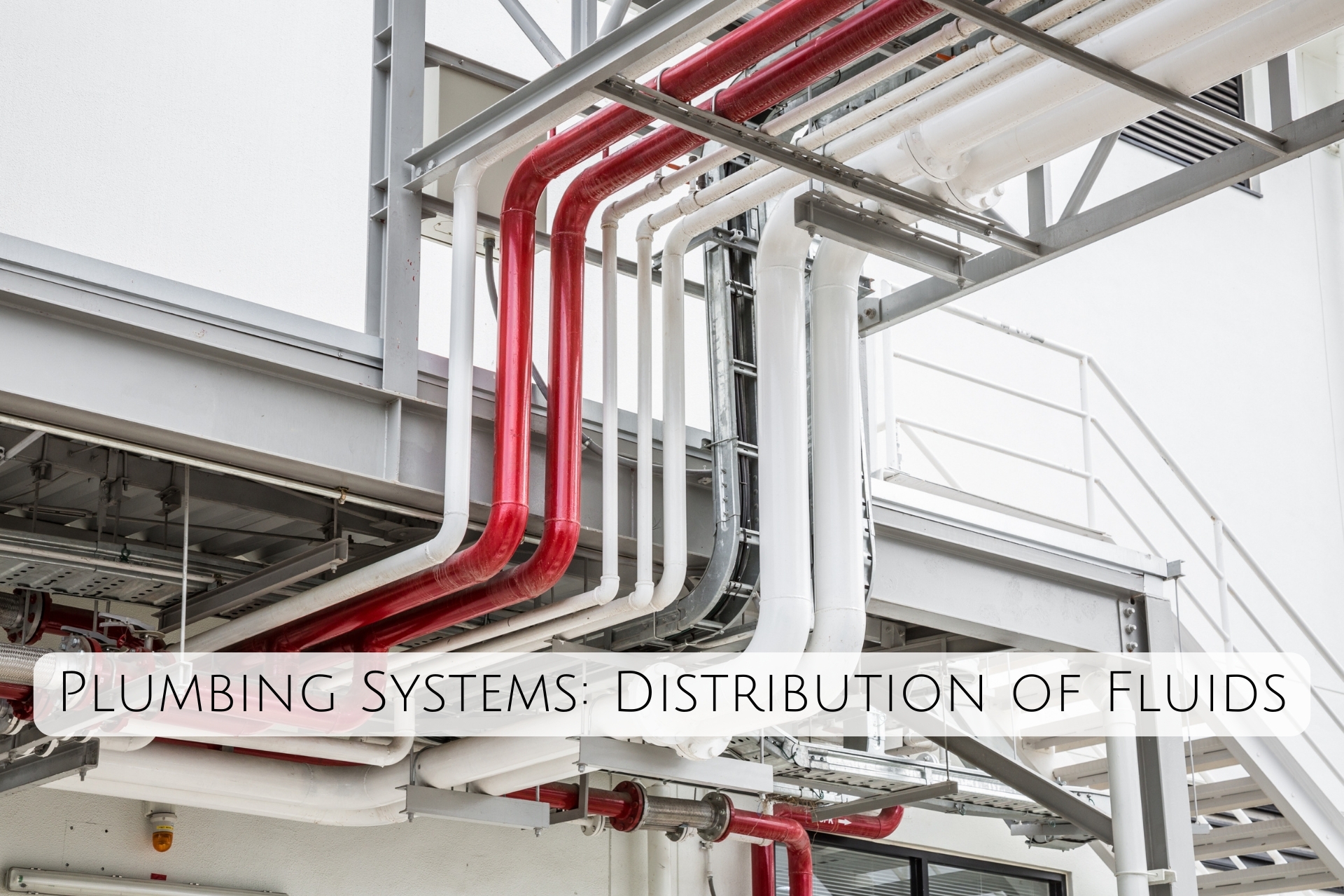
Plumbing systems are designed to deliver fluids to where they are needed in both residential and industrial settings. Though typically associated with water supply and waste management, plumbing is an essential element of hydraulic and pneumatic systems. Plumbing encompasses the piping, fixtures, and fittings that facilitate the transportation and management of fluids.
Key Components of Plumbing Systems:
- Pipes and tubes: Carry water, air, or hydraulic fluid to various parts of a system.
- Valves: Control the flow of water or fluid, ensuring it reaches the correct location.
- Fittings and connectors: Join different sections of pipe and control flow directions.
- Pressure regulators: Maintain consistent pressure within the system to ensure fluid flows efficiently.
While plumbing is primarily concerned with the movement of water in homes and businesses, it shares similarities with the other two systems, particularly in its ability to transport fluid through a network of pipes.
Interconnection of Hydraulics, Pneumatics, and Plumbing: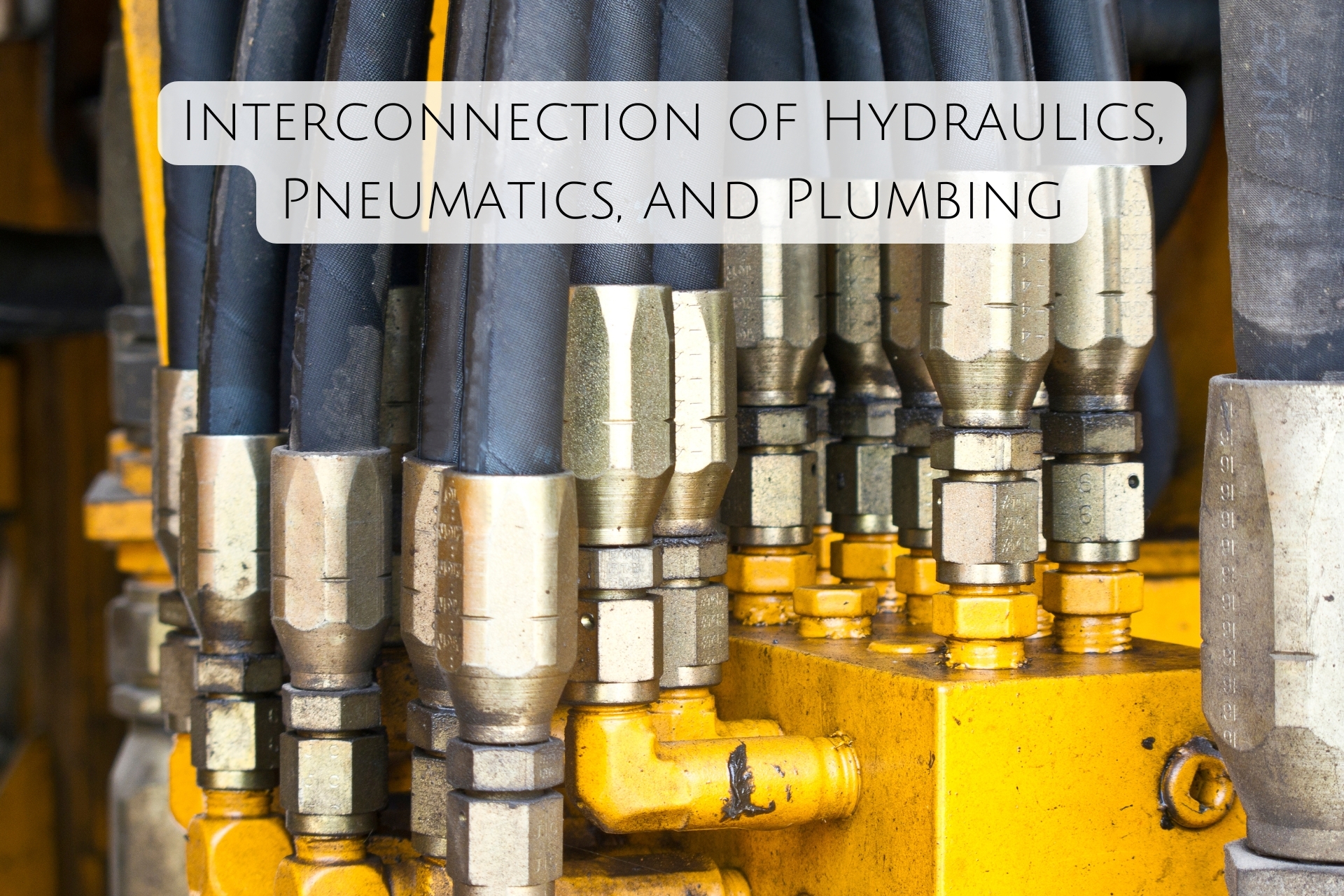
While each system operates with different types of fluids—hydraulics using liquids, pneumatics using gases, and plumbing using water—there is significant overlap in how these systems are designed and used in tandem. Understanding their interconnection helps optimize fluid power applications.
Common Principles Across Systems:
- Pressure management: Both hydraulics and pneumatics require systems that can regulate and maintain pressure to ensure optimal performance. Plumbing, especially in industrial settings, also requires careful pressure management to prevent leaks or bursts.
- Fluid flow control: Each system uses valves to manage the direction, flow, and speed of the fluid. In hydraulics and pneumatics, these valves are crucial for controlling motion. Plumbing systems also rely on valves for controlling water supply.
- Transmission of energy: While hydraulics use liquid to transmit force, pneumatics use air, and plumbing ensures the distribution of water or other fluids. All three systems rely on the controlled movement of fluids to transmit power or deliver the desired function.
Real-World Interconnections:
- Hydraulic-Pneumatic Hybrid Systems: In some applications, hybrid systems are used where both hydraulic and pneumatic power are required. For instance, in manufacturing and automation, hydraulic actuators may be used for heavy lifting, while pneumatic actuators handle tasks like quick, repetitive movements.
- Plumbing in Hydraulic and Pneumatic Systems: Plumbing plays an integral role in both hydraulic and pneumatic systems by ensuring the proper delivery of fluids (oil for hydraulics, air for pneumatics). Plumbing also provides the infrastructure needed for reservoirs, air compressors, and other components that serve the fluid power systems.
- Industrial Applications: In large-scale industrial environments, hydraulic, pneumatic, and plumbing systems are often interlinked. For example, a factory floor might have an automated assembly line powered by pneumatic tools, hydraulic lifts for heavy equipment, and plumbing systems that supply water and coolant to the machinery.
The Advantages and Disadvantages of Each System:
Each fluid power system has its own set of strengths and weaknesses, making them suitable for different applications. Understanding these factors helps in choosing the right system for a particular task.
Advantages of Hydraulic Systems:
- High Power: Hydraulic systems can transmit enormous amounts of power, making them ideal for heavy-duty applications.
- Precision: They offer very precise control of speed and force, which is important in applications like robotics and manufacturing.
Advantages of Pneumatic Systems:
- Simplicity and Cost-Effectiveness: Pneumatic systems are easier to design and maintain compared to hydraulic systems and are more affordable.
- Clean and Safe: Air is generally cleaner than hydraulic fluid, making pneumatics a preferred choice in environments where cleanliness is critical, such as food processing.
Plumbing Systems:
- Cost-Effective and Readily Available: Plumbing systems are typically inexpensive and widely available, making them a go-to solution for transporting water and other liquids.
- Limited in Scope: Plumbing systems are less versatile than hydraulic and pneumatic systems, as they are primarily concerned with transporting fluids rather than transmitting power.
Conclusion: The Fluid Power Ecosystem:
Hydraulics, pneumatics, and plumbing systems are all integral to fluid power applications, each serving a unique purpose but also complementing one another. Their interconnections ensure that fluid power can be harnessed efficiently for a wide range of tasks, from industrial automation and construction to transportation and aerospace. Understanding how these systems work together—through the management of pressure, flow, and energy transmission—enables the design of more efficient and reliable fluid power solutions. Whether it’s using hydraulics for heavy lifting, pneumatics for quick motions, or plumbing for fluid delivery, each system has its place in creating a seamless, interconnected fluid power ecosystem.
Knowledge Hub

Smart Homes Begin in the Kitchen: How Smart Appliances Are Transforming Indian Cooking
Introduction: The evolution of technology has significantly transformed various aspects of everyday...


Your Kitchen Deserves an Upgrade: Must-Have Kitchen Gadgets for Modern Cooks
Introduction: Upgrading your kitchen with new gadgets can turn routine meals into creative adventur...

The Future of Outdoor Recreation: Smart Tools and Gadgets
Outdoor recreation has long been an integral part of human culture, offering opportunities to connec...

The Digital Home: Organizing Your Virtual Space for a Stress-Free Life
In today’s world, much of our lives happen in the digital realm. We manage work, personal tasks, and...

The Importance of Regular Maintenance: How It Affects Replacement Parts Longevity
In the world of machinery, appliances, and vehicles, the longevity of equipment largely depends on h...