
How to Choose Ride-On Toys by Floor Type and Flat Size: Why the Wrong Wheels Ruin It in an Indian Apartment

It's 7:40 pm. Your two-year-old is doing victory laps of the hall on a shiny new push car, and every rotation of those hard plastic wheels sounds like someone dragging a steel trunk across the tiles. The doorbell rings. It's the family downstairs. Again.
If that scene feels familiar, here's the short version: choosing ride-on toys for an Indian apartment comes down to two things most product listings barely mention — what the wheels are made of, and how much clear floor your flat actually gives the toy to move in. Get those two right and almost any brand works. Get them wrong and even an expensive toy becomes a scratch machine your child abandons in a week.
QUICK ANSWER
For most Indian apartments, pick ride-on toys with EVA foam or rubberised wheels rather than bare hard plastic, because soft wheels grip vitrified tiles and marble without scratching or echoing. Then match the toy's turning circle to your flat: compact three-wheelers for 1BHKs, longer scooters and balance bikes only if you have an open hall or corridor.
Why the Wrong Wheels Ruin Ride-On Toys in an Indian Apartment?
Most ride-on toys sold online are designed around one imagined home: a carpeted living room or a private driveway. Indian flats have neither. We have vitrified tiles, polished marble, the odd granite passage, and — in newer builds — laminate wooden flooring in the bedrooms. Every one of those surfaces punishes the wrong wheel differently.
Wheels on kids' ride-ons come in three broad materials, and the difference between them is the whole game:
- Hard plastic (PP or ABS): The cheapest and most common option. On tile and marble, hard plastic wheels are loud, they skid on turns because the surface is too smooth for them to grip, and over months they grind fine scratches into polished floors. They're built for rough outdoor concrete, not your hall.
- EVA foam: A dense, rubbery foam used on better balance bikes and scooters. EVA is quiet, grips glossy tiles well, and won't mark marble or wooden flooring. Its one weakness is durability outdoors — rough society roads chew through foam faster than plastic.
- Rubber or PU (polyurethane): The premium tier, common on quality tricycles and some push cars. Rubber and PU wheels give the best grip and near-silent rolling indoors, and they survive outdoor use far better than foam. You pay more, and on budget toys 'rubber' sometimes means a thin rubber ring over a plastic core — check the listing photos closely.
Here's the part that catches parents out: a skidding wheel isn't just annoying, it's a safety issue. When a hard plastic wheel loses grip on a polished 600x600 vitrified tile mid-turn, the toy slides sideways and tips. Most 'my child fell off the ride-on' stories in Indian parenting groups trace back to exactly this — smooth wheels on smooth floors, usually with a light toy that has a narrow wheelbase.
So if you remember one rule from this whole guide, make it this one: the floor chooses the wheel, and the wheel decides whether the toy is worth owning.
Match the Wheels to Your Floor Type: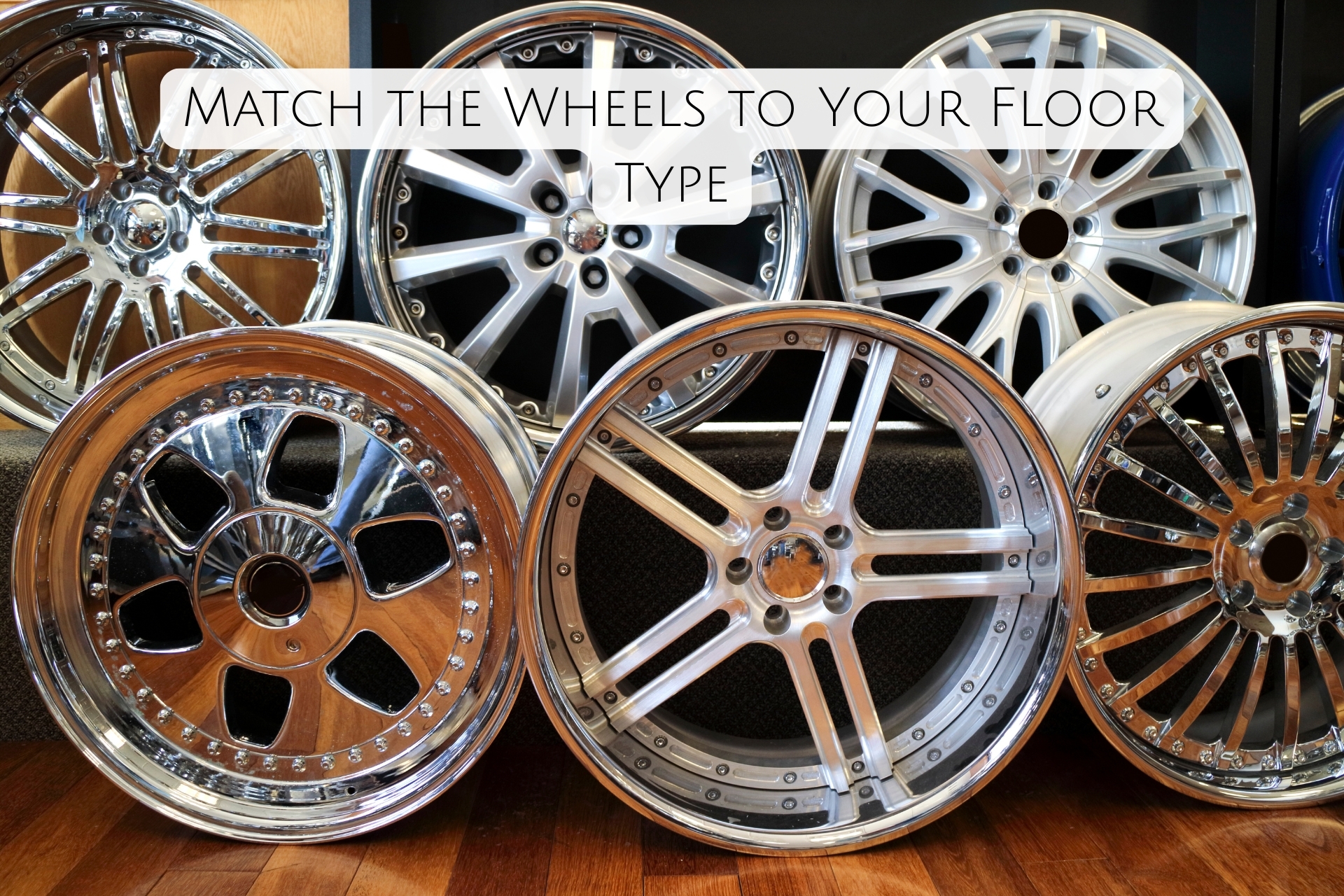
Not sure what flooring you have? Tap it with a coin. A sharp, ringing click usually means vitrified tile or granite; a duller, warmer knock suggests marble; a hollow sound points to laminate wooden flooring over an underlay. Now match accordingly.
Vitrified tiles (most flats built after 2005):
Vitrified tile is extremely hard — it resists scratching better than marble — but it's also the most slippery surface on this list, especially the glossy, mirror-finish variety builders love. Grip, not scratch-resistance, is your problem here.
Parents constantly ask whether ride-on toys scratch vitrified tiles. Bare plastic wheels generally won't gouge the tile itself, but they do two other things: they leave grey scuff lines that need scrubbing, and they pick up grit near the main door and drag it around like sandpaper. EVA foam or rubber wheels solve both, and they cut the rolling noise by more than half — which matters enormously if you're in a tower with a family below you.
One more tile-specific tip: matte or 'rustic finish' tiles grip better than glossy ones, so if your flat has matte tiles you can be slightly more relaxed about wheel material. Glossy tiles plus plastic wheels is the worst combination in this entire guide.
Marble and granite: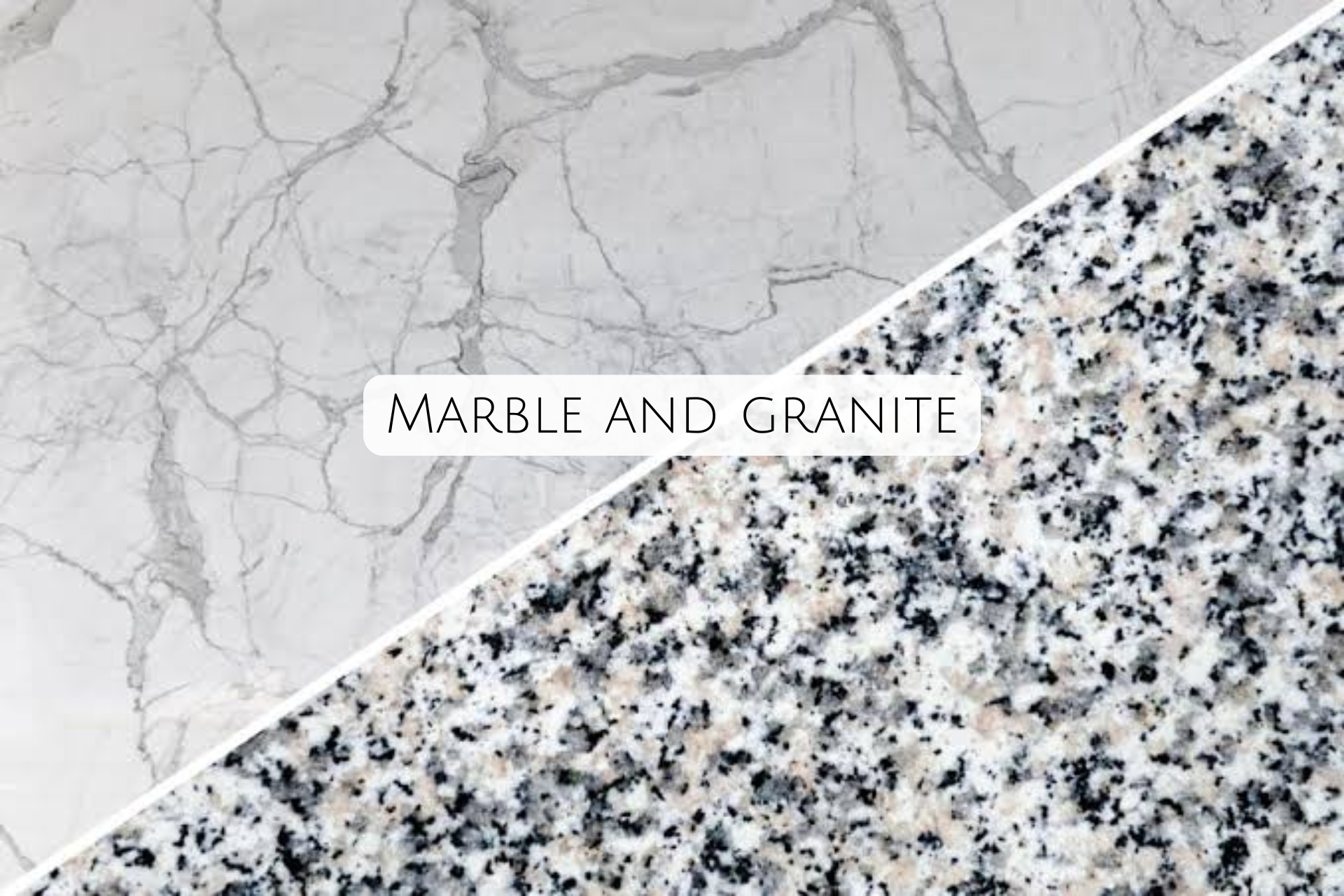
Marble is softer than it looks. It sits around 3 on the Mohs hardness scale — soft enough that trapped grit under a hard wheel can leave permanent hairline scratches, and soft enough that a dropped metal-frame tricycle will chip an edge. If your flat has Makrana-style white marble or any polished natural stone, treat it as the most delicate surface in the house.
For marble, rubber or PU wheels are genuinely worth the extra money, and it's worth checking which wheels are safe for marble floors before you buy rather than after the first scratch appears. Also look at the toy's frame: rounded plastic bodies are far more forgiving than tricycles with exposed metal footrests and kickstands, which will meet your floor eventually. Granite passages are harder and more forgiving, but the grip problem remains — polished granite is nearly as slippery as glossy tile.
Wooden and laminate flooring:
Laminate flooring is a thin decorative layer over fibreboard, and once that layer scratches, there's no polishing it out the way you can with marble. Hard plastic wheels are simply off the table here. Foam or rubber only, and ideally a toy under 3 to 4 kg, because heavy ride-ons concentrate weight on four small contact points and can dent the boards over time.
A cheap insurance policy: keep a doormat routine. Most laminate damage from ride-ons isn't the wheel itself — it's sand and grit carried in from the corridor getting trapped under the wheel. A strict wipe-down of wheels after any balcony or outdoor use saves the floor.
Mosaic, kota and cement floors (older homes):
If you're in an older building with mosaic, kota stone or plain cement flooring, congratulations — you have the most ride-on-friendly floors in India. They're hard, slightly textured, and nearly impossible to damage. Any wheel material works. Your only consideration is noise for the neighbours below, where foam and rubber still win.
Match the Toy to Your Flat Size:
Wheel material solves the floor. Flat size solves whether the toy gets used at all. A ride-on that can't complete a turn inside your hall gets parked against a wall within a month — every parent who's bought an oversized scooter for a compact flat knows that exact spot near the shoe rack where it now lives.
The number that matters is the turning circle, not the toy's length. A toy your child can steer around in roughly a 90 cm to 1 metre circle works in almost any Indian hall. Anything needing more space than that demands a long, clear run — which most flats only have in the corridor between the hall and the bedrooms.
1BHK and compact 2BHK (carpet area under ~700 sq ft):
With a hall of around 10 x 12 feet minus a sofa, TV unit and dining table, your usable play lane is often a strip barely 3 feet wide. The best ride-on toys for small apartments in India share three traits: a tight turning radius, a footprint short enough to store under a bed or in a corner, and no fixed long handle sticking out.
- Best picks: Compact push cars with swivel front wheels, small three-wheel kick scooters with lean-to-steer mechanisms, and low rocking ride-ons that convert between rocker and roller. All of these turn within their own length.
- Skip: Balance bikes, pedal tricycles with long wheelbases, and battery-operated jeeps. These need runway you don't have, and battery cars in particular are heavy enough to damage skirting boards and furniture legs on every misjudged turn.
Larger 2BHK and 3BHK (open hall or long corridor):
Once you have an L-shaped hall or an 8-to-10-foot clear corridor, the field opens up. This is where a balance bike earns its keep indoors, and where a slightly larger scooter makes sense for a 3-to-5-year-old. If you've been comparing ride-on toys for a 2BHK flat, the honest dividing line is that corridor: with it, buy for movement and skill-building; without it, buy for compact spinning-in-place fun.
Even in bigger flats, check the width of your bedroom doors. Standard internal doors are about 32 inches; several popular battery jeeps are 30-plus inches wide with mirrors. A toy that can't move between rooms effectively shrinks your flat back to 1BHK size.
Balconies, terraces and society corridors:
Many families split usage: soft wheels indoors, and outdoor time in the society's stilt parking or podium. If that's your plan, buy for the tougher surface — rubber or PU handles both worlds, while foam wears down fast on rough concrete. And check your society's rules first; plenty of RWAs restrict ride-ons in lift lobbies and upper-floor corridors after complaints, and it's easier to know before your child gets attached to a routine.
The Noise Factor Nobody Warns You About:
Sound behaves differently in an RCC apartment tower than in an independent house. Impact noise — wheels drumming on tile — transmits through the concrete slab directly into the ceiling below, which is why your downstairs neighbour hears the ride-on more clearly than you do. Soft music won't mask it; the vibration travels through the structure, not the air.
Quiet ride-on toys for apartment living share a recipe: foam or rubber wheels, a plastic (not metal) frame with no loose rattling parts, and no 'clacking' steering column. If a listing video lets you hear the toy running on tile, trust that over any description. And test your specific flat: run the toy at 8 pm, then ask the neighbours honestly. Ten seconds of awkwardness now prevents a running feud later.
A jute or rubber-backed play mat in the main riding zone is the cheapest noise fix in existence — it cuts the impact noise dramatically and protects the floor as a bonus. In a compact flat, one 4 x 6 foot mat often covers the entire realistic riding lane anyway.
Your Five-Minute Checklist Before You Buy
Screenshot this and run through it against any listing:
- Wheel material named explicitly: The listing should say EVA, rubber, PU or TPR. If it only says 'durable wheels' or shows suspiciously shiny wheels in photos, assume hard plastic and move on — sellers never hide good wheels.
- Turning circle vs your play lane: Measure the widest clear strip of floor in your hall. Under 3.5 feet wide means you need a swivel-wheel or lean-to-steer design, full stop.
- Weight capacity with margin: Pick a toy rated at least 5 kg above your child's current weight. Ride-ons at their load limit flex, wobble and wear wheels unevenly — and Indian listings sometimes quote optimistic limits.
- Wheelbase and tip resistance: Wider is safer on slippery floors. If the toy looks tall and narrow in photos, it will tip on a glossy tile turn.
- Storage footprint: Know exactly where it will live before it arrives. Foldable scooters and stackable push cars survive small flats; everything else competes with you for floor space daily.
- Serviceable parts: Wheels are the first thing to wear. Brands that sell replacement wheels separately effectively double the toy's life.
The Bottom Line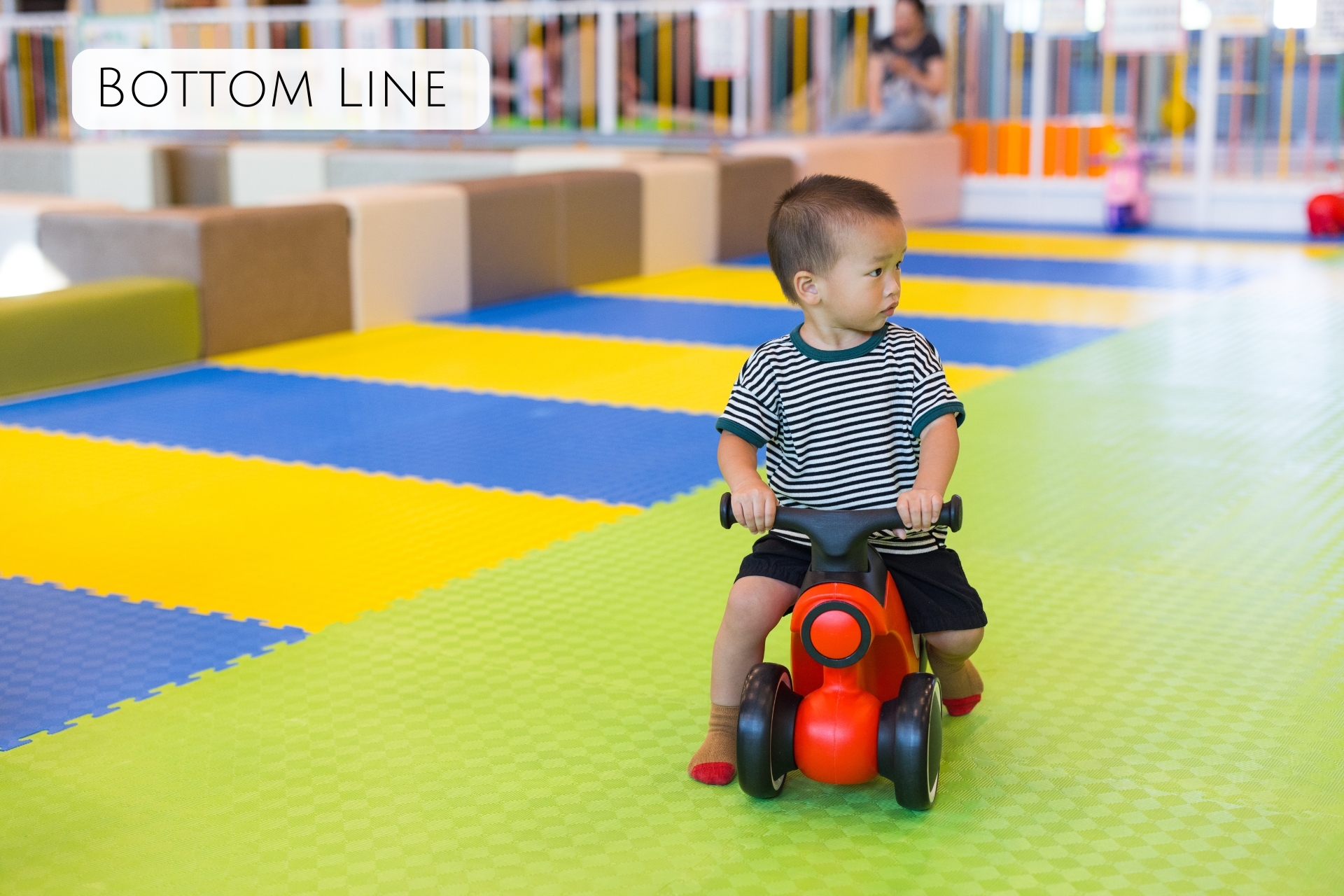
You don't need the biggest, flashiest toy in the catalogue — you need the one engineered for the home you actually live in. Soft wheels for hard floors. Tight turning circles for tight halls. A weight and width your doorframes, skirting boards and downstairs neighbours can live with.
Choose on those terms and the toy becomes what it should be: the thing your child reaches for every single evening, not the expensive obstacle everyone trips over in the passage. Your floor stays scratch-free, your neighbours stay friendly, and the victory laps at 7:40 pm carry on — just quietly enough that nobody rings the doorbell.
Knowledge Hub
How to Choose Ride-On Toys by Floor Type and Flat Size: Why the Wrong Wheels Ruin It in an Indian Apartment
It's 7:40 pm. Your two-year-old is doing victory laps of the hall on a shiny new push car, and every...

Grooming Glove vs. Deshedding Rake vs. Vacuum Attachment
Somewhere around March, your sofa starts looking like it's grown its own fur coat. Tufts on the curt...
Drawer Dividers vs. Rolling Carts vs. Door Organizers: Match the Organizer to the Mess, Not the Room
Why the “kitchen organizer” you bought is failing in the kitchen — and the 30-second test that fixes...

Do Vegetable Choppers Really Save Time, or Just Move It to Cleanup? An Honest Minutes-Per-Meal Breakdown
It's 7:40 pm. The pressure cooker is hissing, someone's asking what's for dinner, and you're standin...

Do Garden Grow Bags Actually Work Better Than Pots?
You're scrolling through a gardening page, and there it is again — another post insisting grow bags...

Cast Iron, Stainless Steel & Non-Stick
Every Indian kitchen ends up with some combination of all three — a heavy iron kadhai from your gran...