
Understanding Blade Angles: How They Affect Performance and Usage

Blade angle, often referred to as "bevel angle," plays a critical role in the efficiency and versatility of any cutting tool, whether it’s a kitchen knife, woodworking tool, or an outdoor survival blade. The angle of a blade impacts its sharpness, durability, precision, and appropriate usage in different tasks. Let’s explore how blade angles influence performance, usage, and longevity across different applications.
The Basics of Blade Angle: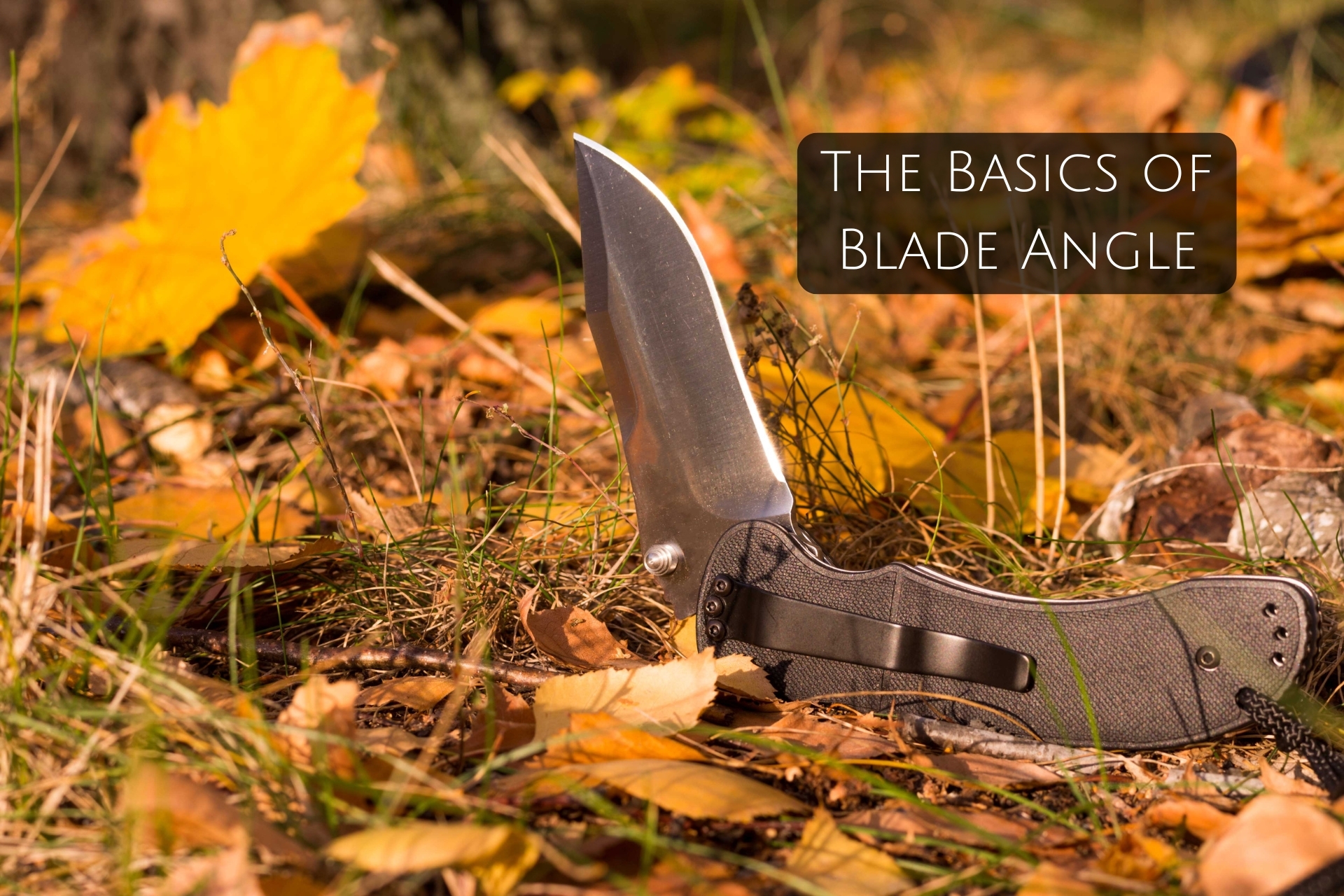
Blade angle refers to the angle at which the edge of a blade is ground and sharpened. Generally, smaller angles (around 15-20 degrees) create a sharper but more fragile edge, ideal for precision cutting, while larger angles (around 25-30 degrees or more) yield a durable, more robust edge suitable for heavy-duty tasks.
- Acute Angles (15-20 degrees): Creates a finer, sharper edge, commonly used in kitchen knives or delicate cutting tools.
- Moderate Angles (20-25 degrees): A balance between sharpness and durability, often used for outdoor knives.
- Obtuse Angles (25-30 degrees or more): Offers a thicker, sturdier edge, suitable for chopping, heavy-duty work, or even prying.
Impact on Sharpness and Precision: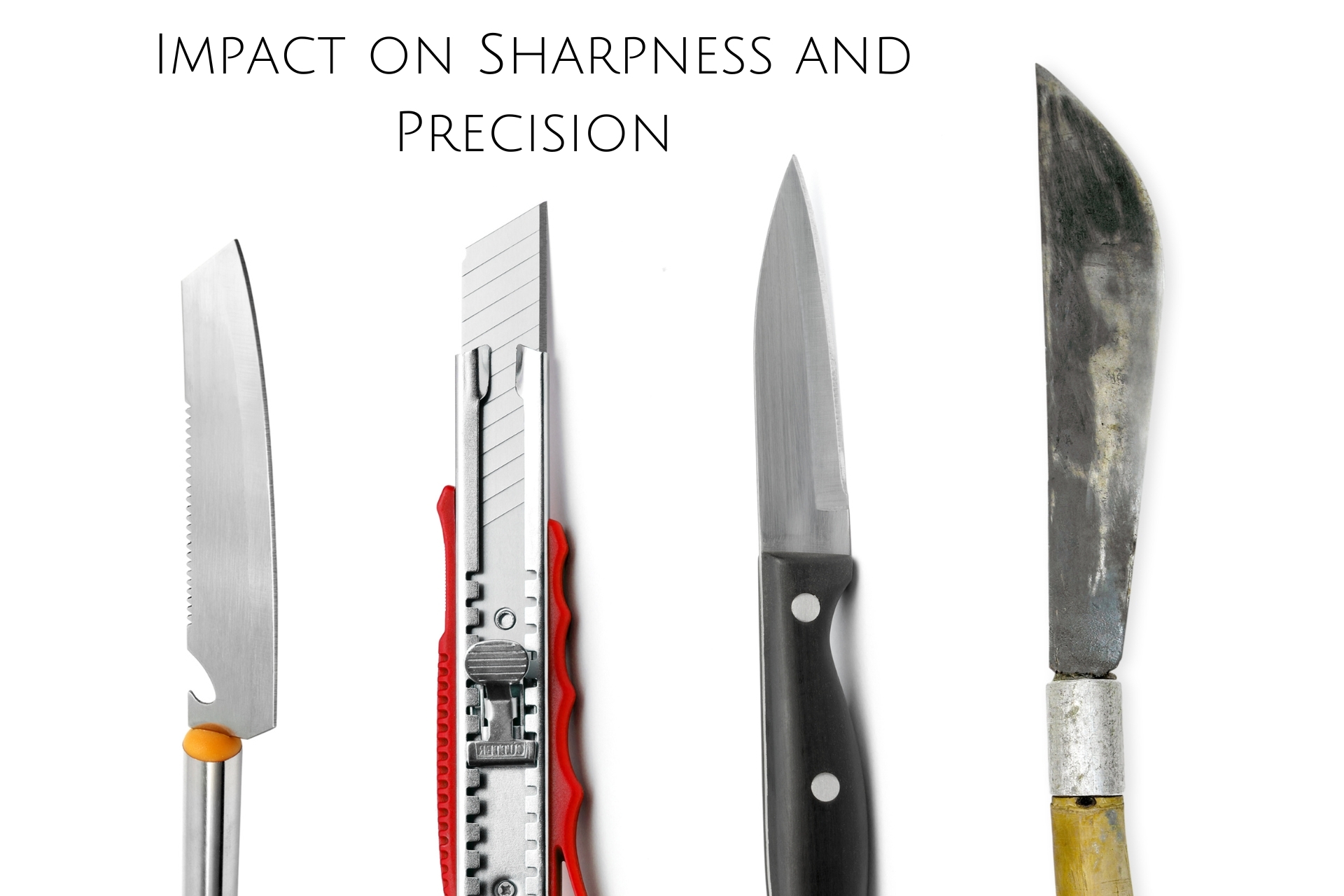
- Sharper Angles for Precision Tasks: A blade angle between 15-20 degrees is best suited for tasks requiring precision, such as slicing meats, vegetables, and fruits in the kitchen. These smaller angles allow the blade to cut cleanly through softer materials but may dull quickly or chip if used on harder surfaces.
- Trade-offs in Durability: While sharper angles increase cutting efficiency and ease, they can be prone to damage with tougher materials. For instance, using a kitchen knife with a fine angle to chop bone or frozen foods may damage the edge.
Durability and Heavy-Duty Applications: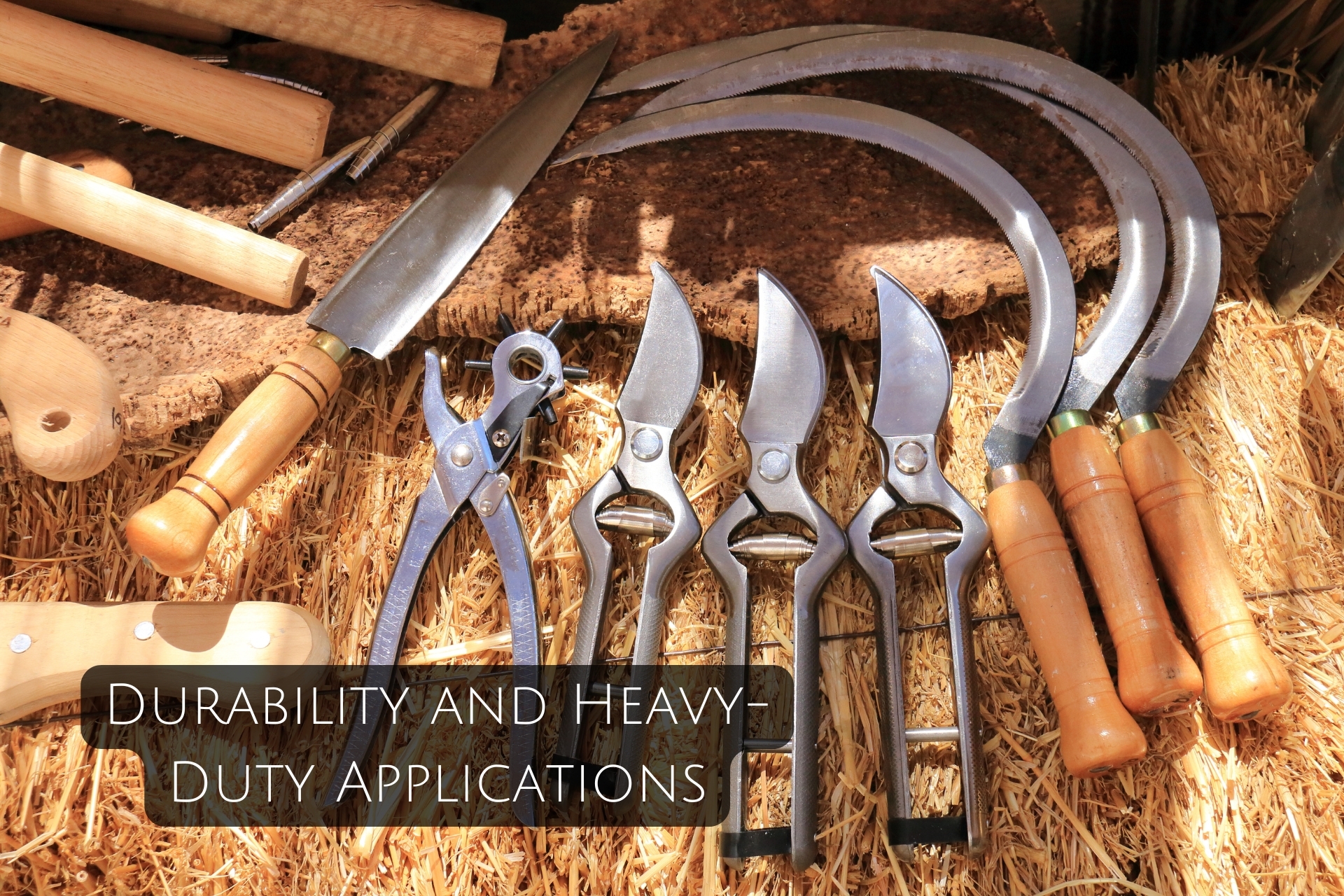
- Larger Angles for Durability: Blades with angles above 25 degrees are more suitable for heavy-duty tasks that involve hard materials. A thicker edge can withstand impacts, reducing the likelihood of chipping or dulling.
- Utility in Outdoor Tools: Outdoor knives and survival tools, like machetes and axes, benefit from these larger angles. The broader edge enables tools to maintain sharpness over more prolonged use and rugged activities like wood chopping or digging.
Material and Blade Angle Compatibility: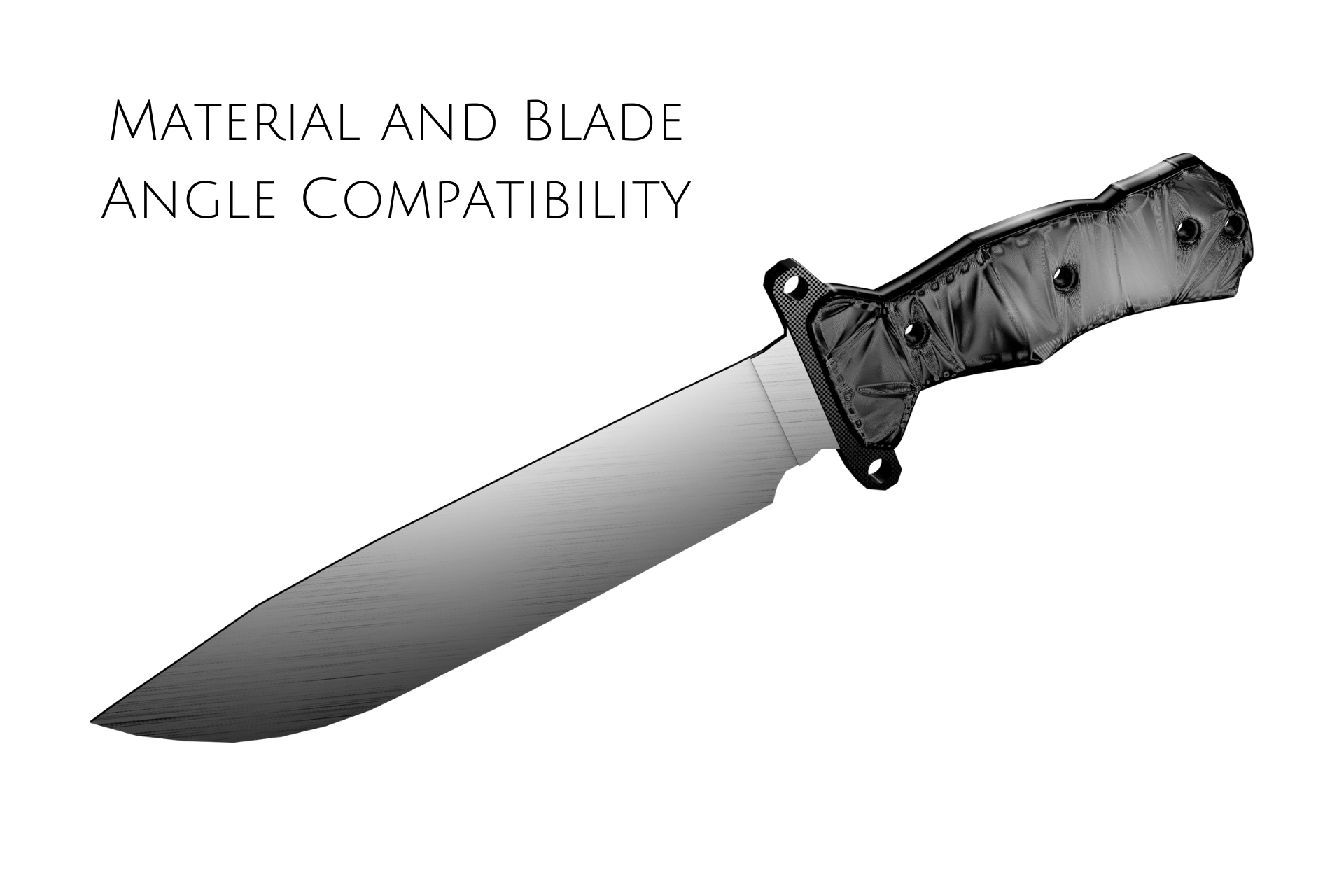
- Steel Quality Matters: Blade angles must be optimized according to the material used. High-carbon steel, known for its hardness and sharpness retention, can handle sharper angles better than softer stainless steel.
- Ceramic Blades: Often ground to smaller angles for precision cuts, ceramic blades stay sharper for longer but can chip if subjected to impact or hard materials.
Blade Angle in Different Types of Knives: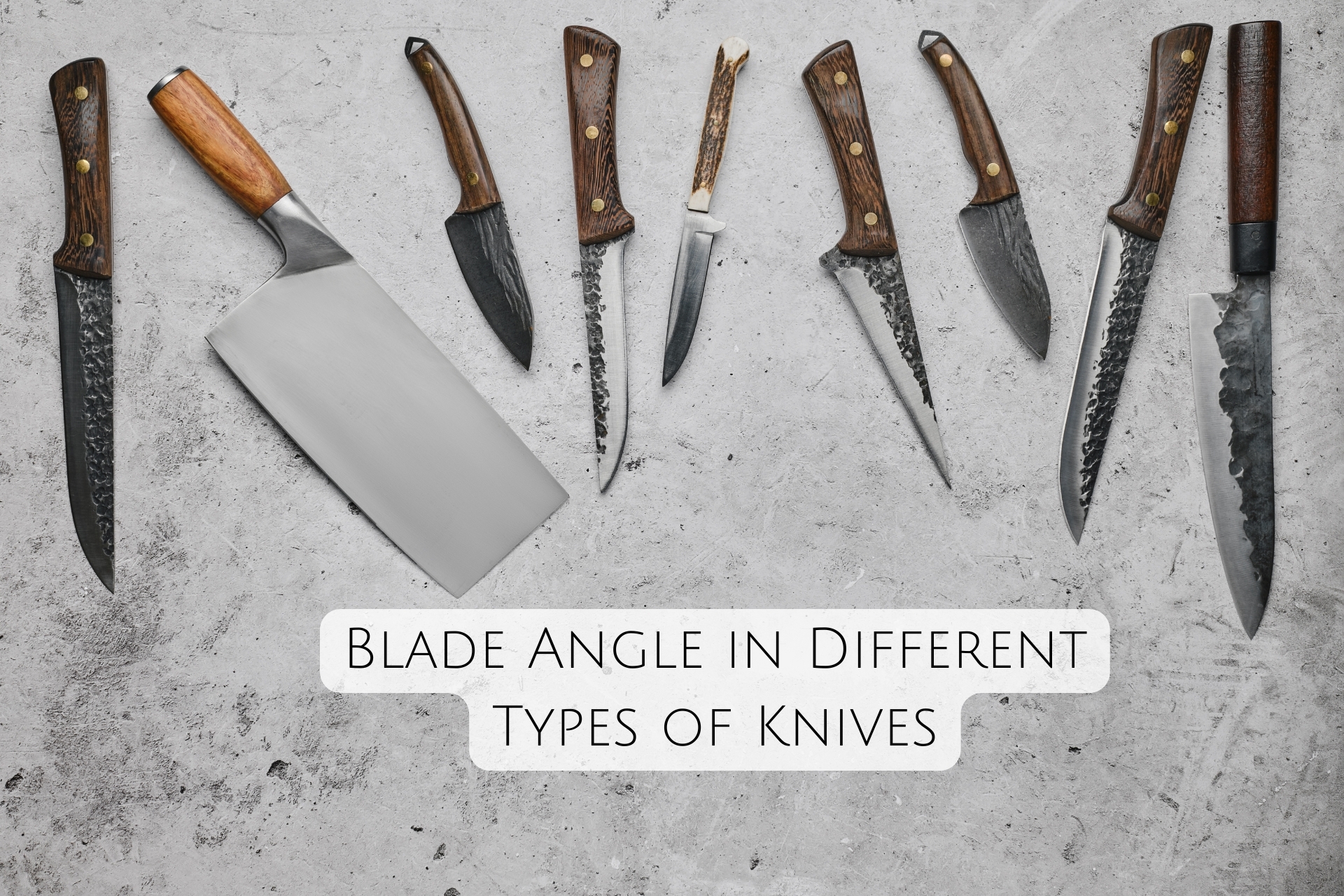
- Chef’s Knives: Typically sharpened to around 20 degrees, chef’s knives offer a balance of sharpness and durability, ideal for slicing, dicing, and chopping softer food items.
- Paring Knives: Sharpened to finer angles, around 15-18 degrees, paring knives are used for delicate tasks like peeling and intricate cutting.
- Cleavers and Butcher Knives: Sharpened at broader angles (25-30 degrees) to withstand the force required in cutting through bone and tougher foods without dulling or breaking.
Blade Angles in Woodworking and Craftsmanship: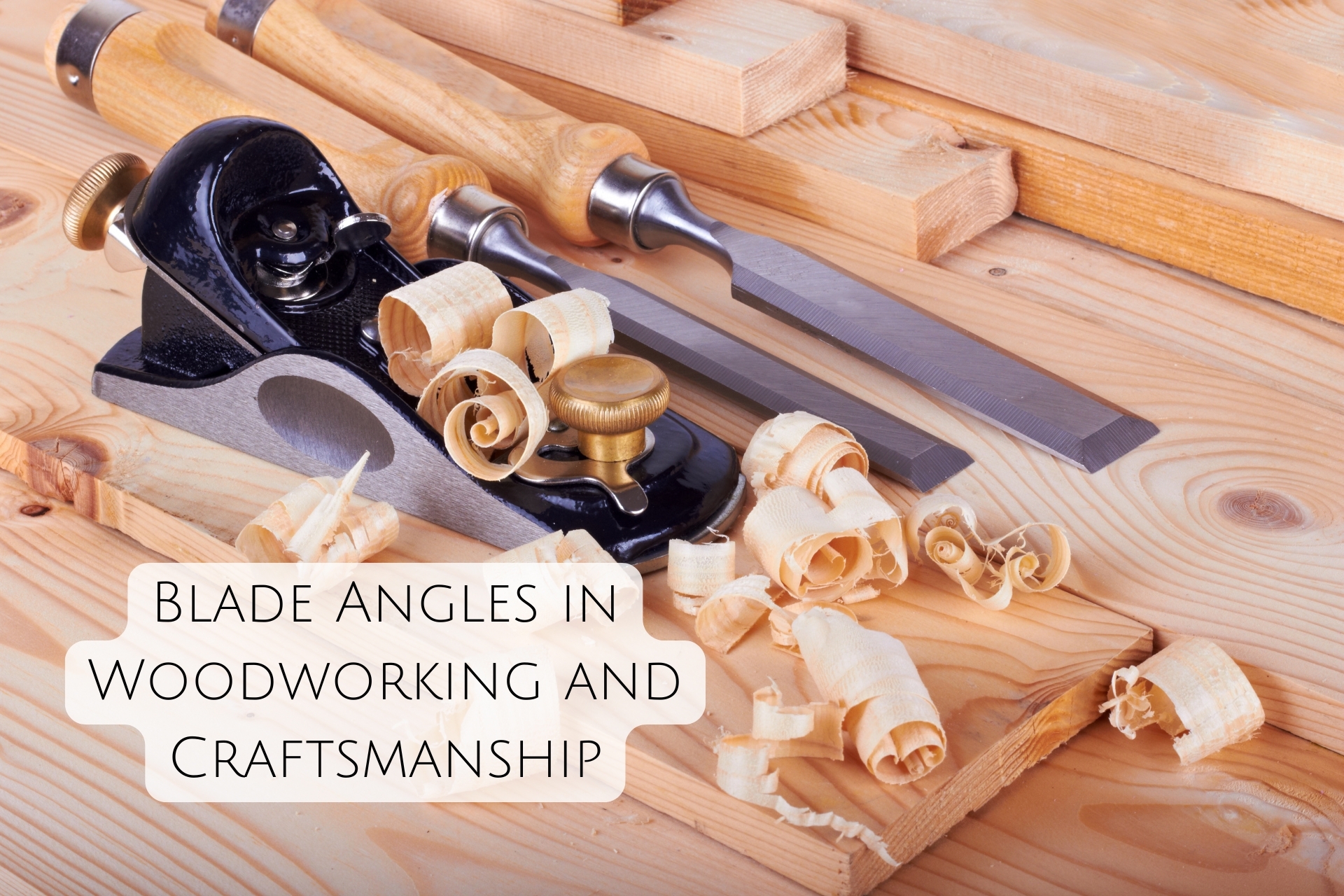
- Chisels and Carving Tools: Chisels for fine woodworking are sharpened to around 20-25 degrees, providing a balance between edge retention and the ability to make clean, precise cuts.
- Utility and Craft Knives: Utility knives, designed for durability over fine precision, often feature a steeper angle, making them suitable for slicing through cardboard, plastic, and other harder materials.
Maintenance and Sharpening Techniques: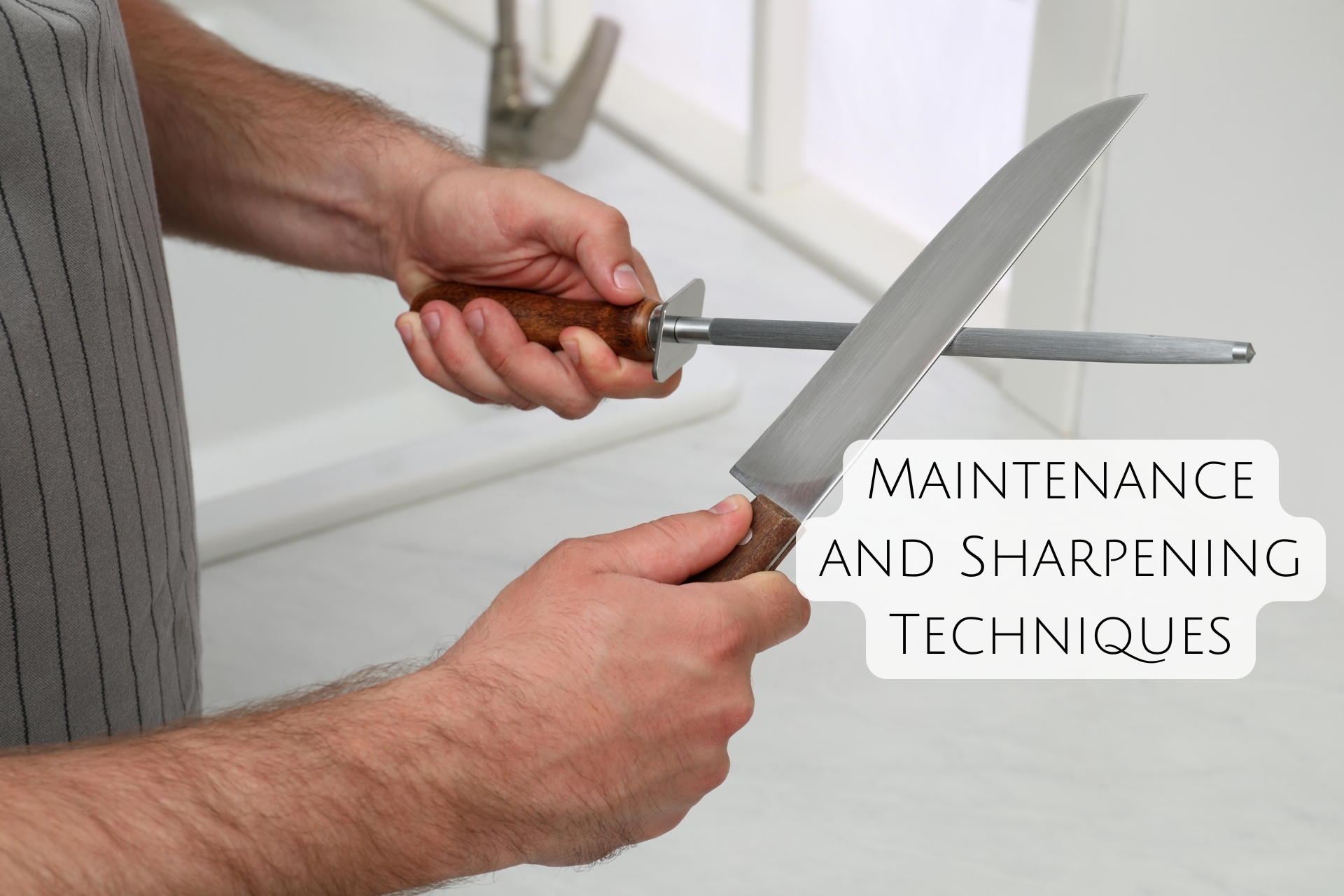
- Matching the Original Angle: When sharpening, it’s essential to maintain the blade’s original angle to preserve its intended performance characteristics. Using sharpening tools like whetstones or guided sharpeners can ensure consistency.
- Adapting for Longevity: Over time, blade angles may be slightly adjusted to extend durability or improve cutting ability based on the knife’s changing role. For instance, an older kitchen knife might be re-ground to a slightly larger angle for chopping tasks.
How to Choose the Right Blade Angle for Your Needs: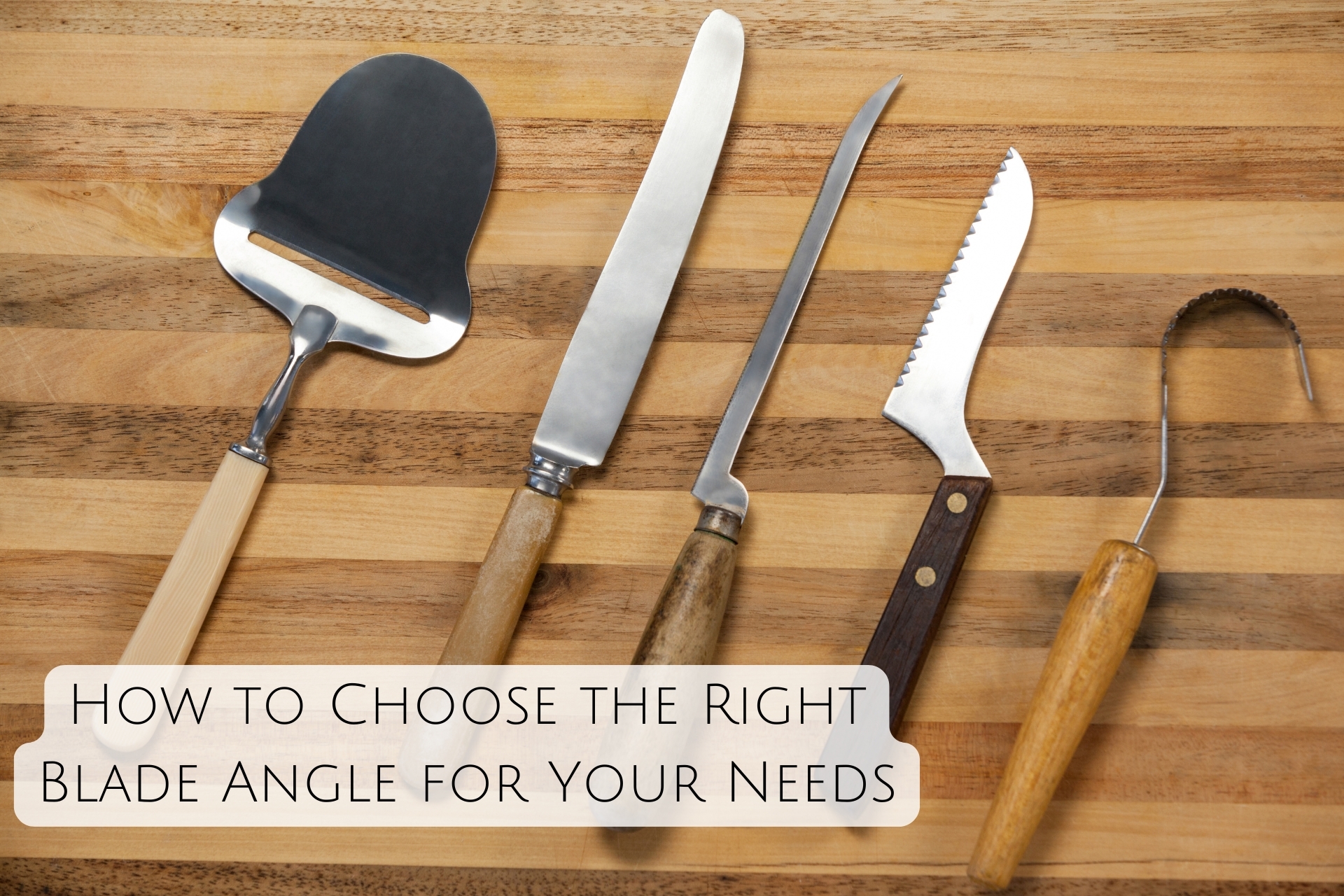
- Consider Usage: For tasks requiring finesse, such as food preparation or woodworking, a smaller blade angle offers precision. For tough outdoor or survival scenarios, a broader angle may provide the durability needed.
- Assess Blade Material and Maintenance: Different blade materials require unique care. High-carbon steel can withstand finer angles with proper maintenance, while softer metals benefit from slightly thicker edges for longevity.
In conclusion, understanding blade angles allows for more tailored usage of your tools, making tasks more efficient and extending the life of the blade. From kitchen tasks to outdoor adventures, choosing the right blade angle can make a significant difference in performance and ease of maintenance, ultimately enhancing both functionality and satisfaction.
Knowledge Hub

The Future of Outdoor Recreation: Smart Tools and Gadgets
Outdoor recreation has long been an integral part of human culture, offering opportunities to connec...

The Digital Home: Organizing Your Virtual Space for a Stress-Free Life
In today’s world, much of our lives happen in the digital realm. We manage work, personal tasks, and...

The Importance of Regular Maintenance: How It Affects Replacement Parts Longevity
In the world of machinery, appliances, and vehicles, the longevity of equipment largely depends on h...

The Interconnection of Hydraulics, Pneumatics, and Plumbing: Understanding Fluid Power Systems
Fluid power systems are a cornerstone of modern technology, playing a crucial role in various indust...

The Evolution of Scanners: From Drum Scanners to Portable Handheld Devices
The journey of scanning technology is a fascinating one, marked by decades of innovation and adaptat...

The Power of Textures: Mixing Materials in Home Accessories
In interior design, texture transforms, bringing depth, warmth, and character to a space. Textures i...